
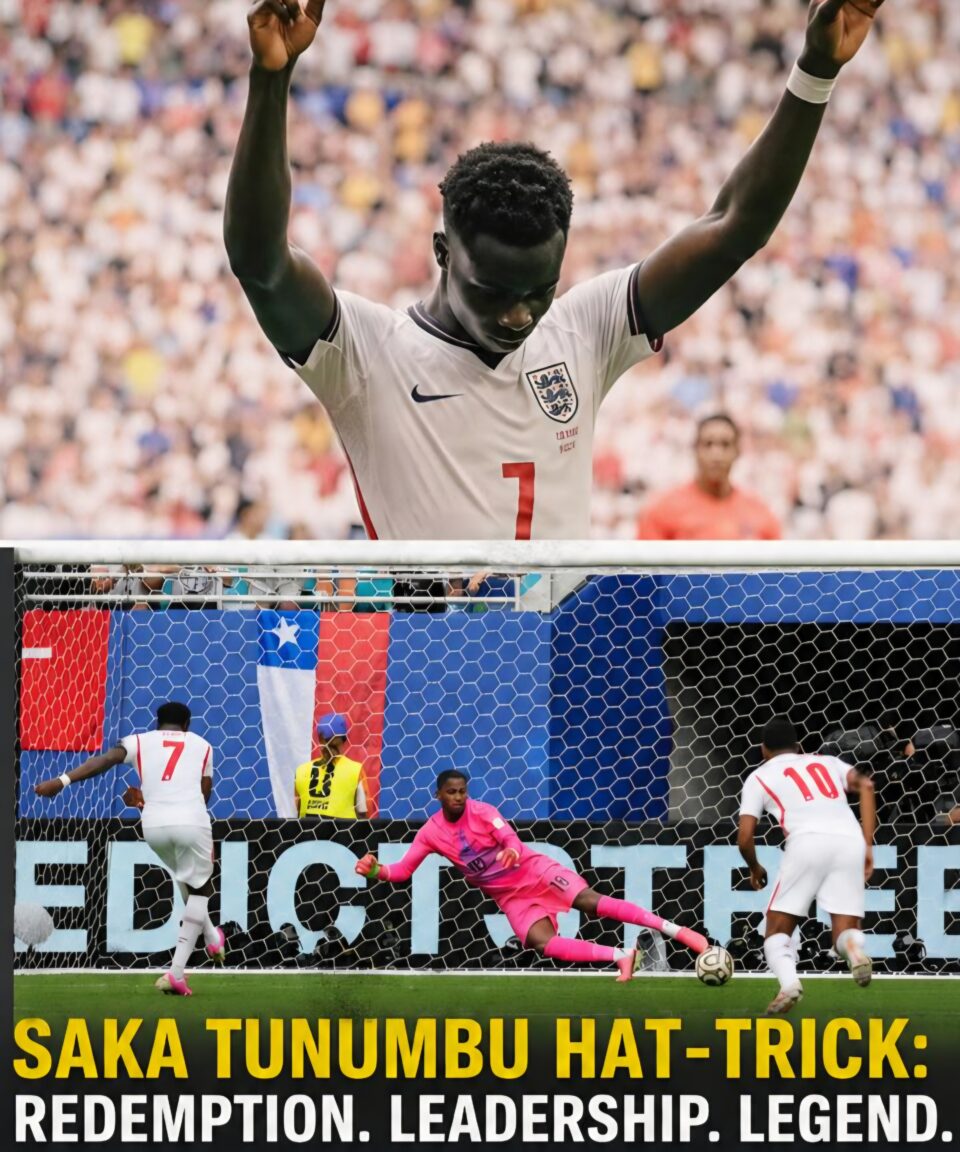
Ten Goals. One Hat-Trick. One Bronze-Medal Match for the Ages.
BY PAUL LUCKY OKOKU
When a Bronze Medal Match Became Football History
Some matches are remembered because they crown champions.
Others are remembered because they remind us why we fell in love with football in the first place.
The 2026 FIFA World Cup third-place playoff between England and France belonged firmly in the second category.
On a warm evening in Miami, what many expected to be little more than a consolation match transformed into one of the greatest spectacles of the tournament. England defeated France 6–4 in a breathtaking contest that produced ten goals, a Bukayo Saka hat-trick, Kylian Mbappé’s relentless pursuit of history, dramatic momentum swings, and a finish that kept supporters on the edge of their seats until the very last whistle.
For ninety minutes, football refused to acknowledge that this was merely a battle for bronze.
Instead, it delivered a masterpiece.
This was a match where emotions changed almost every fifteen minutes. England raced into what appeared to be an unassailable 4–0 lead before France mounted a remarkable comeback that suddenly transformed certainty into anxiety. Just when it seemed the French would complete one of the greatest recoveries in World Cup history, England rediscovered their composure, punished every defensive mistake, and finally secured a famous victory.
Matches like these remind us that football has no obligation to follow a script.
Football has never promised predictable endings. That uncertainty is precisely why the beautiful game continues to captivate generations.
Just when supporters believe they know the ending, the game quietly begins writing a different story.
More Than a Bronze Medal
The third-place playoff has often been unfairly dismissed as the “forgotten match” of the World Cup.
Players are emotionally drained after missing the final. Supporters frequently focus on the championship game that lies ahead. Even television audiences sometimes treat it as little more than a curtain-raiser.
Miami changed that perception.
England and France produced a match worthy of any World Cup stage.
There were moments of brilliance, moments of panic, moments of tactical excellence, moments of individual genius, and moments that reminded every coach why concentration remains football’s most valuable currency.
By the final whistle, nobody was talking about a consolation match.
They were talking about one of the greatest bronze-medal matches the World Cup has ever witnessed.
Sixty Years of Waiting
For England, the victory carried historical significance far beyond the scoreline.
Since lifting the Jules Rimet Trophy under Bobby Moore at Wembley in 1966, England had waited six decades to stand on a World Cup podium again.
They came close in 1990.
They came close again in 2018.
Both campaigns ended with painful defeats in the third-place playoff, leaving England in fourth place.
Miami finally changed that story.
Sixty years after becoming world champions, England returned to the World Cup podium—not with gold this time, but with a bronze medal earned through resilience, attacking football, and remarkable character.
Legacies are not inherited. They are earned. Sixty years after lifting football’s greatest prize, this generation earned its own place in England’s story—not by matching 1966, but by ensuring 2026 will be remembered in its own right.
Sometimes, it simply waits for another generation to write the next chapter.
The Beauty of Football
Football has always possessed a unique ability to humble certainty.
A four-goal lead can suddenly become fragile.
A defeated team can suddenly believe again.
A match that appears finished can become unforgettable.
Football has an invisible force that every player, coach, and supporter recognizes, even if no statistic can measure it. One spell of confidence can completely reshape a match. England controlled that force for much of the first half. France seized it after the break. In the end, England regained control when the decisive moments demanded composure rather than panic.
England controlled momentum almost completely during the first half.
France owned large portions of the second.
The ultimate difference was not talent.
Both squads possessed extraordinary talent.
The difference was composure.
When the decisive moments arrived, England found one more answer.
That single quality often separates victory from regret.
When the Match Turned Into a Storm
Football is never won in the first forty-five minutes. It is won by the team that continues to make the better decisions when the pressure changes sides.
The opening whistle had barely settled before England announced their intentions.
They were aggressive without being reckless, composed without being passive, and clinical every time France left space behind. Thomas Tuchel’s side pressed with intensity, moved the ball with purpose, and attacked with conviction. France, by contrast, looked unusually hesitant. Passes lacked their normal rhythm, transitions were slow, and England punished almost every lapse in concentration.
Declan Rice opened the scoring in the 3rd minute, giving England the perfect start. It was the kind of early goal that immediately changes the emotional balance of a knockout match. France suddenly found themselves chasing the game instead of controlling it.
Fifteen minutes later, Ezri Konsa doubled the advantage. England had not simply taken control of the scoreboard—they had taken control of the tempo.
From midfield, England dictated where the game was played. Every recovery quickly became an attack. Every French mistake seemed to create another English opportunity.
Then came Bukayo Saka.
Already one of England’s most dangerous attacking players throughout the tournament, Saka produced a first half that defenders will want to forget. His movement between the lines, intelligent positioning, and composure in front of goal repeatedly exposed the French back line.
His first goal arrived in the 37th minute.
His second came in first-half stoppage time.
At halftime, England led 4–0.
Very few inside the stadium—or watching around the world—believed the contest was still alive.
A Different France Emerges
Football, however, has a way of punishing anyone who believes a match is over too early.
Whatever Didier Deschamps said inside the dressing room worked.
France returned for the second half looking like a completely different team.
Their passing became quicker.
Their pressing became more coordinated.
Their body language changed.
Most importantly, they began attacking with belief instead of hesitation.
Kylian Mbappé ignited the comeback with a goal in the 48th minute.
Six minutes later, Bradley Barcola added another.
The confidence that had belonged entirely to England during the first half began shifting toward France.
Momentum had changed shirts.
From a midfielder’s perspective, this is often the most dangerous period of any football match. When one team senses vulnerability and the other begins protecting its lead instead of playing its game, every pass becomes heavier, every clearance becomes rushed, and every mistake grows in importance.
France sensed exactly that.
Mbappé struck again in the 66th minute, reducing the deficit to 4–3.
What had looked like a comfortable evening for England had suddenly become one of the most tense moments of the tournament.
The stadium changed with it.
English supporters became anxious.
French supporters found their voices again.
Neutral fans realized they were witnessing something extraordinary.
For nearly twenty minutes, the match belonged entirely to France.
The Moment Champions Respond
Great teams are not remembered because they never lose control.
They are remembered because they know how to regain it.
Just when France appeared poised to complete one of the greatest World Cup comebacks ever, England earned a penalty.
Bukayo Saka stepped forward.
Pressure can reveal character.
Saka showed composure.
His finish completed a magnificent hat-trick and restored England’s two-goal cushion at 5–3.
The goal did more than extend England’s lead.
It stopped France’s momentum.
It settled English nerves.
It reminded everyone why elite players deliver their biggest performances when the pressure is greatest.
France refused to surrender. Ousmane Dembélé struck deep into stoppage time to make it 5–4, ensuring there would be one final twist.
But England had the last word.
Jude Bellingham, calm amid the chaos, scored in the 90+8th minute to seal a remarkable 6–4 victory.
It was a fitting finish to an unforgettable night.
Ten goals.
Two completely different halves.
One of the finest third-place matches the FIFA World Cup has ever produced.
From a Midfielder’s Eye
One lesson stood above every statistic in Miami:
Momentum wins periods. Composure wins matches.
France controlled much of the second-half rhythm. England controlled the decisive moments. That is often the difference between an entertaining performance and a memorable victory.
Beyond the Scoreline: Leadership, Legacy, and Lessons from Miami
The scoreboard tells us who won. Legacy explains why the victory will be remembered.
When the final whistle sounded in Miami, England had secured a 6–4 victory over France and claimed the bronze medal.
But this match will be remembered for far more than its final score.
It became a celebration of football’s unpredictability, a lesson in resilience, and a reminder that even matches played outside the final can leave an unforgettable place in World Cup history.
Sixty Years of Waiting
For England, the bronze medal represented more than a consolation prize.
It marked their first World Cup podium finish since lifting the trophy in 1966.
For six decades, generations of English footballers had carried the weight of expectation. Outstanding teams had come close in 1990 and again in 2018, only to fall short in the third-place playoff.
This generation finally ended that wait.
While every English player would undoubtedly have preferred to play in the final, finishing among the world’s top three is an achievement worthy of recognition.
Sometimes history is not written only by champions.
Sometimes it is written by those who refuse to let disappointment define them.
Why the Third-Place Match Still Matters
Every World Cup, the debate returns:
Should the third-place playoff still exist?
Critics argue that once the dream of lifting the trophy is gone, the match loses its meaning.
Miami delivered a powerful response.
This was far more than a contest for bronze.
It gave England their first World Cup podium finish since 1966, ending a 60-year wait. It gave Bukayo Saka the opportunity to produce a hat-trick that will be remembered as one of the tournament’s defining individual performances. It added another remarkable chapter to Kylian Mbappé’s extraordinary World Cup legacy. Most importantly, it reminded the football world that pride, resilience, and national honour are never consolation prizes.
Football is not remembered only for the teams that lift the trophy.
It is also remembered for the matches that capture our imagination, inspire future generations, and remind us why the beautiful game continues to unite the world.
Miami proved that some bronze medals are worth far more than the metal they are made from.
Bukayo Saka’s Masterpiece
If there was one player who embodied England’s determination, it was Bukayo Saka.
Three goals.
Relentless movement.
Composure under pressure.
And the courage to convert the penalty that halted France’s comeback at the moment the match threatened to slip away.
Great players do not simply score goals.
They score the goals that change matches.
Saka’s third goal restored England’s belief and shifted the emotional balance back in their favour.
His performance will rightly be remembered as one of the finest individual displays of the tournament.
Mbappé Reminded the World Why He Is Elite
Even in defeat, Kylian Mbappé once again demonstrated why he remains one of football’s defining players.
With two goals against England, he finished the tournament as the leading contender for the Golden Boot.
More importantly, he refused to accept defeat.
When France trailed by four goals, Mbappé continued to attack.
He continued to inspire.
He continued to believe.
Leadership is not measured only by victories.
Sometimes it is measured by refusing to surrender when the odds appear overwhelming.
Thomas Tuchel and Didier Deschamps
Football often judges managers only by results.
That can be unfair.
Thomas Tuchel deserves credit for preparing England to produce one of their most complete first halves of the tournament. His side pressed intelligently, attacked with purpose, and punished France’s defensive mistakes.
At the same time, the second-half collapse offers valuable lessons.
Protecting a substantial lead requires the same discipline used to build it. England allowed France back into the contest and nearly paid a heavy price.
For Didier Deschamps, believed to be managing his final World Cup match with France, the evening reflected the resilience that has characterized much of his tenure.
His players could easily have accepted defeat at halftime.
Instead, they fought until the final whistle.
That fighting spirit deserves recognition.
Leadership Lessons
As we reflect on this remarkable contest, a few questions naturally arise:
- Could England have managed the second half with greater composure after taking a 4–0 lead?
- Did France wait too long before showing the urgency they displayed after halftime?
- Should England have slowed the tempo earlier to deny France the momentum that fueled their comeback?
- Could France’s attacking quality have produced a different outcome had they started the match with the same intensity they showed in the second half?
These are not criticisms.
They are the questions every coaching staff asks after every major tournament.
Football is a game of continuous learning. Success belongs to the teams that turn experience into improvement. Great teams don’t dwell on the past—they apply its lessons to the future. Talent may win matches, but growth builds lasting legacies.
From a Midfielder’s Eye
Watching this match reminded me of one lesson I learned throughout my own playing career.
Momentum is one of football’s most dangerous opponents.
When momentum is with you, play with confidence—but never with arrogance.
When momentum turns against you, remain calm—but never become passive.
The team that manages emotion usually manages the result.
England survived because they rediscovered their composure.
France nearly completed the impossible because they never stopped believing.
Both lessons matter.
The Spirit of Miami
Long after the goals are forgotten individually, many will remember the atmosphere.
The embraces between opponents.
Thomas Tuchel and Didier Deschamps sharing mutual respect after ninety exhausting minutes.
Players exchanging shirts.
Supporters applauding both teams.
The realization that football had delivered another unforgettable chapter.
This was what the World Cup was created to celebrate.
Competition without hatred.
Passion without losing respect.
Victory earned.
Defeat accepted with dignity.
Closing Reflections
There is an old saying that football is “the beautiful game.”
Matches like this explain why.
It was beautiful because it was unpredictable.
Beautiful because neither team surrendered.
Beautiful because brilliance and mistakes existed side by side.
Beautiful because it reminded us that football, like life, constantly tests our ability to respond when circumstances change.
England will remember the bronze medal.
France will remember the comeback that almost was.
The rest of the football world will remember Miami.
Years from now, supporters may struggle to remember every pass, every tackle, or even every goal from this remarkable afternoon. But they will remember how the match made them feel. They will remember England’s resilience, France’s refusal to surrender, Bukayo Saka’s brilliance, Kylian Mbappé’s relentless pursuit of greatness, and a bronze-medal match that captured the imagination of the football world. That is the enduring power of the FIFA World Cup.
Not because it hosted the final.
But because it hosted a match that reminded us why the World Cup belongs to everyone who loves the game.
Final Whistle
Football is built on moments, but history is built on how we respond to them. England responded with resilience, France with courage, and together they produced a bronze-medal classic that proved one timeless truth: no match is ever “just” a third-place playoff when pride, legacy, and the love of the game are on the line.
Share Notes
If this article informed, inspired, or brought back memories of an unforgettable World Cup moment, please consider sharing it with fellow football lovers, coaches, players, and young athletes.
Football is more than ninety minutes. It is history, leadership, resilience, teamwork, and lessons that extend far beyond the pitch.
If this story sparked a conversation, then it has already achieved one of football’s greatest purposes—bringing people together.
Please Like • Comment • Share • Follow
Your engagement helps preserve football history and inspires the next generation to appreciate the beautiful game beyond the final score.
Did You Know?
- 🏆 England secured their first World Cup podium finish since winning the tournament in 1966, ending a 60-year wait
- ⚽ Bukayo Saka’s hat-trick was one of the standout individual performances of the 2026 FIFA World Cup and helped England secure the bronze medal.
- 🎯 Kylian Mbappé’s brace saw him surpass Lionel Messi to become the FIFA World Cup’s all-time leading goalscorer, adding another milestone to his remarkable World Cup career.
- 🌎 The 6–4 scoreline made this one of the highest-scoring third-place matches in FIFA World Cup history.
Until the World Cup Final…
May we celebrate victory with humility, accept defeat with dignity, and always respect the beautiful game.
Paul Lucky Okoku is a FIFA Legend | Football Analyst | Journalist-at-Large | CAF Africa Cup of Nations Silver Medalist | Former Nigerian Super Eagles & Flying Eagles International | Former Vice-Captain, Flying Eagles | Former Olympic Qualifying Team Member | Founder & CEO, Greater Tomorrow Children’s Fund (GTCF)