
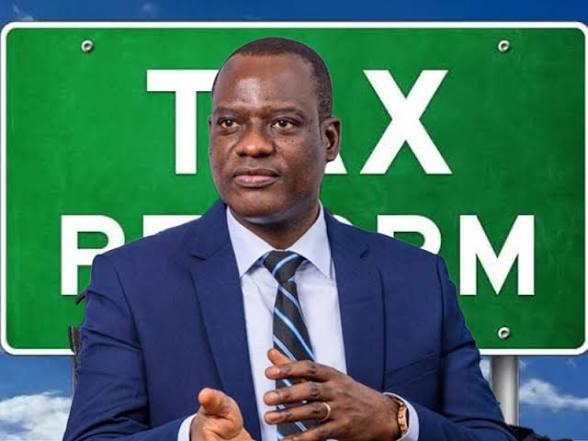
Seven Months Later: Has Nigeria’s Tax Reform Strengthened the Social Contract?
What It Means for Citizens, Accountability, and Development
Taxes alone do not build great nations. Trust does.
BY PAUL LUCKY OKOKU
Let’s be honest.
Tax is probably not a subject most people look forward to reading about, and paying taxes is certainly not something most people enjoy.
I certainly don’t.
But this article is not really about taxes. It is about accountability, citizenship, and the kind of nation we want to build together.
Seven months after Nigeria’s tax reform took effect, I believe it is time to move beyond the emotion of taxation and begin asking a more important question:
What should taxpayers expect in return?
Seven Months Later: The Conversation Should Change
When Nigeria’s tax reforms took effect on January 1, 2026, they generated strong reactions across the country. Many Nigerians opposed the reforms. Others questioned why they should pay more into a system they believed had not consistently delivered public services or accountability.
Those concerns were—and remain—understandable.
Back then, the debate centered on one question:
Why should Nigerians pay taxes?
Seven months later, I believe we should be asking a different question:
Now that citizens are paying, what should they reasonably expect in return?
That is where the real conversation begins.
Let Me Be Clear
Before anyone misunderstands my position, let me state it plainly.
I do not enjoy paying taxes.
Like millions of people around the world, I would rather keep every naira or dollar that I honestly earn.
This article is not an advocacy for taxation.
It is an appeal for responsible citizenship, responsible leadership, and a stronger democracy.
After living in the United States for more than four decades, I have learned one important lesson:
No nation develops on natural resources alone.
It develops when citizens and government both accept responsibility.
What the Reform Was Intended to Achieve
One of the principal architects of Nigeria’s tax reforms, Taiwo Oyedele, Chairman of the Presidential Committee on Fiscal Policy and Tax Reforms, consistently explained that the objective was not simply to collect more revenue. He argued that the reforms were designed to simplify Nigeria’s tax system, reduce the burden on many ordinary workers, protect lower-income earners, improve compliance, and create a fairer and more efficient tax structure.
Whether one agrees with every aspect of the reform or not, the purpose should ultimately be judged by results—not promises.
That is where accountability begins.
Taxes Are Not the Destination—They Are the Starting Point
Taxes should never be viewed as an end in themselves.
They are simply the means through which governments finance public responsibilities.
The real question is not how much government collects.
The real question is:
What does government do with the money?
That is the responsibility every democracy must answer.
The Social Contract Must Work Both Ways
A healthy democracy rests on an unwritten agreement.
Citizens contribute honestly.
Government accounts honestly.
Neither responsibility can exist without the other.
If citizens refuse to contribute, government struggles to provide services.
If government collects revenue without transparency, public trust disappears.
The relationship only works when both sides fulfill their obligations.
Seven Months Later, What Should Nigerians Expect?
If taxation is working as intended, citizens should begin seeing measurable improvements—not just hearing speeches.
Taxpayers should expect visible progress in areas such as:
- Roads and transportation: Better roads, improved drainage, safer highways, fewer potholes, and smoother movement of people and goods.
- Sanitation and public health: Cleaner streets, effective waste collection, improved drainage systems, and healthier communities.
- Healthcare and emergency services: Better-equipped public hospitals, reliable ambulance services, improved emergency response, and stronger public health infrastructure.
- Education, sports, recreation, and public facilities: Better schools, maintained parks, functional stadiums, community recreation centres, and properly maintained public assets.
These are not luxuries.
They are among the reasons taxes exist.
What Should Taxpayers See in Their Own Communities?
One of the greatest misconceptions about taxation is that people expect all the benefits to come from the federal government.
That is not how successful democracies work.
Much of what improves people’s daily lives happens much closer to home.
If you pay taxes, you should begin seeing improvements in the community where you live.
For example:
- Parks that are clean, safe, and properly maintained.
- Children’s playgrounds where families can spend time together without fear.
- Community sports fields where young people develop their talents.
- Walking trails and recreational centres that promote healthier lifestyles.
- Reliable waste collection and cleaner streets.
- Functional streetlights and safer neighbourhoods.
- Better drainage that reduces flooding.
- Roads maintained before they fail—not after they collapse.
These may appear to be small things.
They are not.
They are the everyday signs that taxpayers’ money is working.
When families spend weekends enjoying clean parks, when children play safely, and when communities take pride in well-maintained public spaces, those are not gifts from government.
They are public services funded by citizens.
Community Clinics: Healthcare Where People Live
One of the best examples of what taxes are supposed to provide is something many Nigerians of my generation remember well—community health clinics.
Growing up in Lagos during the 1970s and early 1980s, community clinics were part of everyday life. They served as the first point of contact for many families seeking basic healthcare.
Residents could receive services such as:
- Treatment for common illnesses.
- Maternal and child healthcare.
- Immunization for children.
- Family planning services.
- Basic health education.
- Referral to larger hospitals when specialized care was needed.
Primary healthcare centres are designed to bring healthcare closer to the people rather than forcing every patient to travel to major hospitals. They remain the foundation of public healthcare delivery in Nigeria and are still a key part of government health policy.
These facilities exist because governments recognize that healthcare should begin within the community.
That is exactly what taxpayers should expect.
When citizens contribute through taxation, they should expect accessible primary healthcare, well-equipped community clinics, trained healthcare workers, and essential medicines at the grassroots level.
If these facilities are underfunded or deteriorating, citizens have every right to ask why.
Healthcare is not simply an expense.
It is an investment in people.
Growing up in Lagos in the 1970s and early 1980s, I also remember another public service that many people today may have forgotten.
+The old Lagos Town Council, later known as the Lagos City Council*, placed great emphasis on environmental sanitation. Public health workers and sanitary inspectors routinely inspected neighborhoods, drains were cleaned, and mosquito-control measures formed part of the city’s public health strategy. These were not random acts of government generosity. They were municipal services designed to protect public health and funded through public administration.
That experience taught me an important lesson: taxpayers should not only expect roads and schools. They should also expect clean neighborhoods, functioning drainage systems, community health clinics, effective sanitation, and public health programmes that improve everyday life.
These are among the visible signs that government is honoring its responsibility to the people.
The best tax system is the one citizens can actually see—in clean streets, healthy communities, safe parks, functioning clinics, and well-maintained public facilities.
One memory from my childhood has never left me. Before receiving services at some public institutions, including community health facilities, we were often encouraged to recite the National Pledge:
The Nigerian National Pledge:
“I pledge to Nigeria, my country
To be faithful, loyal, and honest.
To serve Nigeria with all my strength.
To defend her unity,
And uphold her honor and glory.
So help me God.”
The National Pledge, written by Professor Felicia Adebola Adeyoyin and adopted in 1976, was intended to instill patriotism, civic responsibility, and national unity, particularly among young Nigerians.
Looking back today, I see a deeper lesson. The pledge spoke not only about what Nigeria owed us, but also about what we owed Nigeria. Citizenship is built on rights, but it is also built on responsibilities.
Citizens Should Now Demand More Accountability—Not Less
One important consequence of taxation should be an increase in civic engagement.
One of the things I noticed after moving to America more than forty years ago was something I had never really thought about before.
One of the first surprises after moving to America more than forty years ago was how clean my shoes remained.
My cars stayed cleaner for much longer.
Not because I washed them more often, but because the roads were clean, properly paved, and regularly maintained.
It sounds like a small detail.
It isn’t.
It reflects something much bigger—a culture of maintenance.
Infrastructure is not built once and forgotten.
It is maintained continuously because taxpayers expect it, and public officials know they will be held accountable if they neglect it.
That is one of the greatest differences between building infrastructure and maintaining infrastructure.
Great nations do both.
When citizens contribute financially to government, they also gain a stronger voice.
That voice should be used respectfully—but firmly.
Citizens should now ask:
- How much tax revenue has been collected?
- How is it being spent?
- Which projects have been completed?
- Which projects remain unfinished?
- What measurable improvements can taxpayers actually see?
These questions are not acts of opposition.
They are acts of responsible citizenship.
Accountability Begins Closer to Home
National politics often dominates public discussion.
Yet many of the services that affect everyday life are delivered much closer to home.
Citizens should pay close attention to what is happening in their states and local governments.
Roads.
Markets.
Primary healthcare.
Sanitation.
Community schools.
Sports facilities.
Parks.
These are the places where taxpayers should begin asking questions and demanding measurable results.
Democracy grows stronger when accountability starts at the community level.
Hold Your Local Government Accountable
One lesson I have learned after living in the United States for over forty years is that accountability usually begins at the local level.
People know their county commissioners.
They attend community meetings.
They question local budgets.
They challenge proposed developments.
They ask why roads have not been repaired, why parks have not been maintained, why drainage projects have stalled, or why public facilities are deteriorating.
That is democracy in practice.
Citizens should respectfully ask their elected officials:
- Why has this road not been repaired?
- Why is this primary healthcare centre understaffed?
- Why are our parks neglected?
- Why are our schools deteriorating?
- What happened to last year’s budget allocation?
- When will this project be completed?
These are not political questions.
They are taxpayer questions.
Every naira collected should leave a visible footprint in the community.
Government Cannot Do Everything Alone
Modern societies recognize that government alone cannot solve every social challenge. That is why governments encourage citizens, businesses, faith communities, charitable organizations, and philanthropists to become partners in national development.
One way they do this is through the tax system.
Charitable organizations, corporate social responsibility initiatives, and private foundations complement—not replace—the work of government.
That partnership strengthens communities, encourages civic participation, and helps address needs that government alone cannot always meet efficiently.
Corporate Social Responsibility: Business Is Also a Partner in Nation Building
Responsible companies do more than make profits.
They invest in communities through education, healthcare, youth development, environmental projects, disaster relief, and sports.
When companies support schools, hospitals, sports programmes, or community projects, they are demonstrating responsible corporate citizenship. Governments often encourage these investments through tax policy because strong communities create stronger economies.
Development is strongest when responsibility is shared.
Personal Foundations: Giving Back with Purpose
Across the world, successful entrepreneurs, athletes, entertainers, and public figures establish charitable foundations.
These foundations support education, healthcare, youth development, sports, scholarships, disaster relief, and community development.
Depending on the applicable tax laws, qualified charitable contributions may provide tax benefits to donors. That does not mean they are making money from charity. It means governments intentionally encourage philanthropy because it complements public investment.
I say this from personal experience.
I founded Greater Tomorrow Children’s Fund, a registered 501(c)(3) charitable organization in the United States, and Greater Tomorrow Children’s Foundation (GTCF), a registered non-governmental organization in Nigeria.
These organizations exist because development is strongest when responsibility is shared.
Trust Must Be Earned
I understand why many Nigerians remain skeptical.
Trust cannot be demanded.
It must be earned.
Government earns trust through transparency.
Through accountability.
Through measurable results.
Citizens earn trust by participating honestly and holding leaders accountable through lawful, peaceful, and consistent civic engagement.
Final Reflection
The true test of taxation is whether it creates a culture of maintenance rather than a culture of abandonment.
Seven months after Nigeria’s tax reforms took effect, perhaps the conversation should no longer be about whether Nigerians like paying taxes.
That is the true measure of success.
Taxpayers should begin to see better roads, accessible community health clinics, cleaner communities, improved schools, safe pedestrian walkways, functional drainage systems, reliable public transportation, well-maintained parks, modern sports and recreational facilities, safer neighborhoods, and public infrastructure that is maintained—not neglected. These are the visible signs that taxpayers’ money is working and that government is honoring its responsibility to the people.
Citizens should become more informed and engaged.
Government should become more transparent and accountable.
Businesses should continue investing in the communities where they operate.
Charitable organizations should continue complementing government by reaching people and communities that public institutions alone cannot always serve.
Above all, public officials should never forget that every naira collected in taxes belongs to the people—not to those entrusted to manage it.
A healthy democracy grows stronger when responsibility is shared.
Citizens have responsibilities.
Government has responsibilities.
Businesses have responsibilities.
Faith communities have responsibilities.
Charitable organizations have responsibilities.
None can build a nation alone.
The strongest nations are built when every institution, every organization, and every citizen fulfills their responsibility with integrity.
Taxes alone do not build great nations. Trust does.
A successful tax system is measured not only by how much revenue it collects, but by how transparently that revenue is managed and how visibly it improves the lives of citizens.
Democracy is strongest when responsibility is shared and accountability is expected.
Taxes give citizens a voice. Accountability gives that voice power. Trust transforms that power into national development.
Share Note
If this article encourages thoughtful discussion, please share it. The purpose is not to persuade Nigerians to love paying taxes. The purpose is to encourage every citizen to understand both their rights and responsibilities while expecting the same standard of transparency, accountability, and service from those entrusted with public office.
Paul Lucky Okoku
FIFA Legend | Former Nigeria Flying Eagles Vice-Captain | Former Super Eagles International | Africa Cup of Nations Silver Medalist | Football Historian | Project Management Professional | Football Analyst | Journalist-at-Large | Founder & CEO, Greater Tomorrow Children’s Foundation (GTCF)