

Nigeria’s telecommunications industry has become one of the critical pillars of the country’s digital economy, connecting millions of citizens, supporting businesses and providing the infrastructure upon which an increasingly digital society depends.
But beneath the impressive growth of the sector lies a persistent challenge: the burden of taxes, levies and other fiscal demands imposed on telecommunications operators by different levels of government.
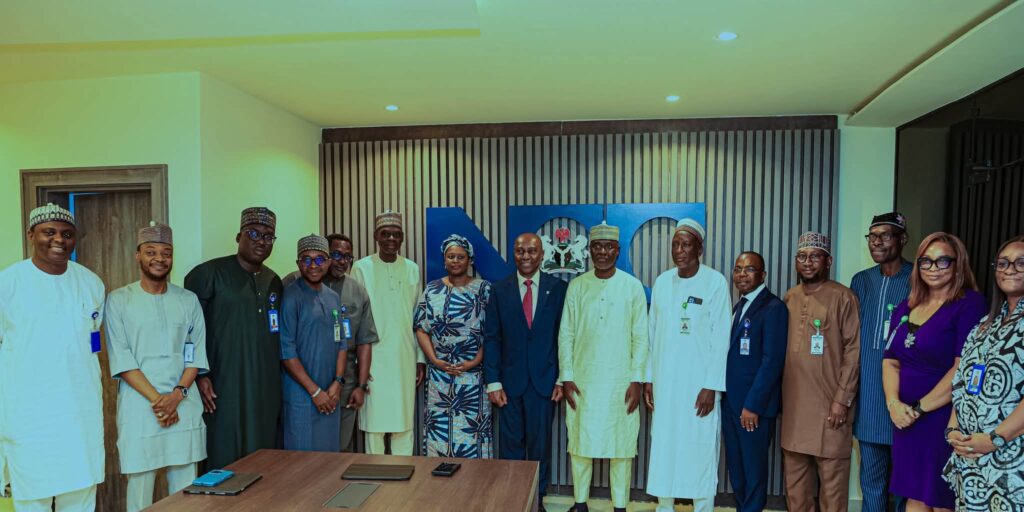
It is against this backdrop that the recent meeting between Nigerian Communications Commission (NCC) Executive Vice Chairman, Dr. Aminu Maida, and Tax Ombud/Chief Executive of the Office of the Tax Ombudsman, Dr. John Nwabueze, assumes particular significance.
The meeting signals a potentially important step towards addressing one of the industry’s longstanding concerns — multiple taxation and prolonged tax disputes.
Telecommunications operators operate in a highly capital-intensive environment. Building and maintaining networks requires significant investments in infrastructure, spectrum, technology, power and security.
Additional taxes and levies, particularly where different government authorities impose overlapping charges, can increase the cost of doing business.
For operators, the consequences can extend beyond corporate balance sheets. Higher operating costs may affect investment decisions, network expansion and the pace at which new technologies and services are deployed.
The issue therefore goes beyond taxation. It is also about creating conditions that encourage sustained investment in Nigeria’s digital infrastructure.
The Office of the Tax Ombudsman provides an institutional avenue for taxpayers to raise complaints and seek redress over tax administration-related issues.
Nigeria’s establishment of the office places the country among the relatively few nations with a dedicated tax-ombudsman mechanism, according to Maida.
For the telecommunications sector, a stronger relationship between the NCC and the Tax Ombudsman could provide an avenue for tax-related disputes to be handled more efficiently.
Rather than allowing disagreements to escalate into prolonged disputes, greater institutional coordination could encourage early intervention, dialogue and faster resolution.
The NCC is the primary regulatory authority for Nigeria’s telecommunications industry. Its mandate goes beyond regulating operators; it also plays an important role in creating an environment capable of supporting investment and sustainable sector development.
This makes collaboration with institutions responsible for taxation and fiscal administration particularly important.
Maida’s meeting with Nwabueze suggests recognition that regulatory efficiency cannot be separated from the wider business environment.
If operators face regulatory certainty in one area but unpredictable or overlapping fiscal obligations in another, the overall investment environment remains challenging.
Closer cooperation between the NCC and the Tax Ombudsman could benefit both sides of the equation.
For operators, faster resolution of disputes could provide greater certainty and reduce the time and resources spent dealing with conflicting tax demands.
For government, improved coordination could strengthen tax administration while reducing unnecessary friction with businesses.
The broader economy could also benefit if resources that might otherwise be tied up in prolonged disputes are redirected towards network expansion, innovation and digital services.
The significance of the NCC-Tax Ombudsman engagement ultimately extends beyond resolving tax disputes.
Nigeria is seeking to deepen digital inclusion, expand broadband access and build a stronger digital economy. Achieving these objectives requires sustained private-sector investment and an operating environment in which businesses can plan with reasonable certainty.
Telecommunications infrastructure is particularly important because it supports activities across banking, education, healthcare, commerce, government and other sectors.
Consequently, any policy that reduces unnecessary barriers to telecoms investment can have implications far beyond the industry itself.
The success of the emerging partnership will depend largely on how effectively the two institutions translate their understanding into practical mechanisms for resolving disputes.
Stakeholders will be watching to see whether the collaboration produces faster responses to complaints, clearer engagement between regulators and tax authorities, and greater consistency in the application of tax obligations.
For Maida, the direction is clear. The NCC views the Tax Ombudsman as an important partner in building a telecommunications sector that works better for operators, investors, government and consumers.
At a time when Nigeria is placing increasing emphasis on digital transformation, creating a predictable and business-friendly telecommunications environment may prove just as important as expanding the networks themselves.