
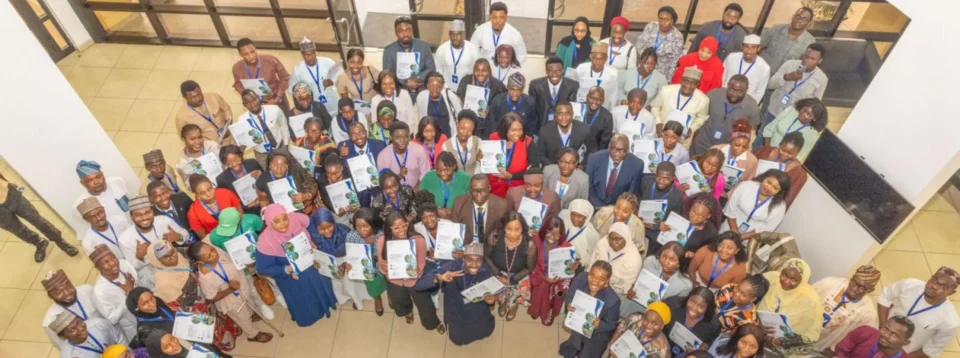
“We want a health system that listens to young people now, not later,” said Dr Muhammad Jafar, a young medical doctor with the Federal Ministry of Youth Development, as he addressed participants at the United Nations building in Abuja.
His message set the tone for a consultation that brought together 230 participants from youth-led groups, early-career health professionals, students, young innovators, young people from internally displaced persons (IDP) camps, out-of-school adolescents and people with disabilities from national and sub-national levels. Participants gathered to help shape the World Health Organization (WHO) African Regional Strategic Plan 2026–2030 and Vision 2035.
These demographics highlight why youth perspectives are critical to health planning and align with Nigeria’s priorities on universal health coverage, primary health care, adolescent health and disability inclusion. The consultation brought together participants from 36 states and the Federal Capital Territory (FCT), including persons with disabilities and representatives from IDP communities.
Many participants described barriers affecting their health and well-being. Hellen Beyioku Alase of the Deaf Women Aloud Initiative explained that communication remains a major challenge for Deaf young people. She said access to sign language interpretation and accessible health information remains limited, creating barriers to equitable access to health services.
Adama Ali, a young woman from an internally displaced persons camp, described how flooding disrupted access to health services in her community. She said the experience reinforced the importance of resilient health systems that continue serving communities during emergencies. She expressed hope for a future in which girls can continue their education, stay healthy and live safely.
Young health care workers also highlighted challenges faced during emergencies. One participant, Omoboriowo Damilola Isaac, said, “Involve us in decision-making, invest in our ideas and empower us to lead lasting change.”
These experiences illustrate issues that statistics alone cannot capture. They also point to potential innovative solutions. Participants called for health systems that are accessible, inclusive, climate-resilient and responsive to the needs of young people. They emphasized the importance of being involved in decision-making processes rather than remaining observers.
The consultation was led by Nigeria’s Federal Ministry of Health and Social Welfare, the Ministry of Youth Development and WHO. The event engaged young people and generated feasible recommendations for consideration in the WHO regional planning process.
WHO supported the consultation as part of its commitment to ensuring that young people contribute to shaping health policies and priorities that affect their health and well-being. The consultation also provided a platform for diverse groups of young people to share experiences and propose solutions to health challenges affecting their communities. Additional support included mentorship programmes, continuous meaningful youth engagement, partnerships and efforts to achieve measurable improvements in the well-being of young people across the region.
Dr Pavel Ursu, WHO Representative in Nigeria, represented by Officer in Charge Dr Alex Chimbaru, reminded participants that young people are not only beneficiaries of health policies but also partners in shaping Africa’s health future.
“Youth perspectives are indispensable to achieving WHO’s vision of a healthier Africa and to advancing national priorities towards Universal Health Coverage, health security, and resilient health systems,” said Dr Ursu
The United Nations Resident Coordinator, Mr Mohamed Malick Fall, represented by Ms. Wafaa Saeed Abdelatef, reinforced the message of inclusion, noting that decisions affecting young people should involve young people themselves.
The Minister of Youth Development, Comrade Ayodele Olawande, who was represented by Essien Emmanuel, encouraged participants to remain engaged, describing young people as partners, innovators and leaders in transforming health across Africa.
WHO teams shared key priority areas of work with the Government of Nigeria across all levels, including health systems strengthening, disease prevention and control, emergency preparedness and response, the polio eradication programme, maternal, child and adolescent health, digital innovation and community engagement. This work aligns with national priorities and supports the Regional Director’s vision, building a Healthier Africa, Together
Participants recommended intensified efforts and stronger support for mental health, improved access to sexual and reproductive health services, investment in digital tools developed by young innovators, climate-resilient health systems and expanded training opportunities for young health workers. They also called for more disability-inclusive services and infrastructure.
Several participants said the consultation created opportunities for meaningful dialogue. Ibok Emediong Michael, a registered nurse from Abuja, said the event provided a space where young people could openly discuss their experiences and priorities. Another participant, Abdulazeez Ameerah Eleojo, said that when young people are given a seat at the table, they help protect the future of health, not just shape it.
The insights gathered in Abuja will contribute to regional discussions and inform deliberations at the Regional Committee in 2026. Success will depend on collaboration among governments, WHO, civil society, academia and young people.
Nigeria’s health system continues to adapt to demographic change, climate pressures and emerging health challenges. Participants called for continued investment in youth participation, inclusive health services and innovation.
As Yusuf Abdullahi from Gombe State, north-eastern Nigeria, said at the close of the consultation, “A plan for young people without young people is a plan about young people, not a plan with young people.”
Young people across Africa are calling on leaders to work with them to shape the future of health.