
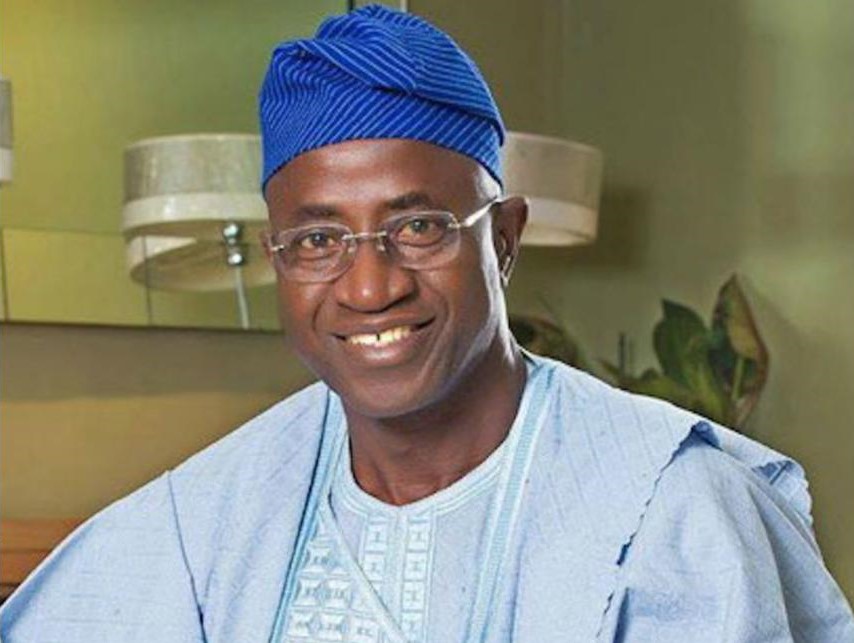
Segun Odegbami’s radio discussion with Lawrence Maxwell and Godwin Dudu-Orumen raised questions about representation, electoral power, leadership and the future of Nigerian football. After listening to the full program, I went looking at the history and records behind some of those questions.
BY PAUL LUKCY OKOKU
Reform should not only change the rules. It should help us understand what has changed—and what still needs to be examined.
I promised that I would return to this subject.
Before Segun “Mathematical” Odegbami’s discussion on 90 mins with Mathematical on Eagle7 Sports Radio 103.7 FM, Abeokuta, I encouraged Nigerians to listen.
I have now listened to the full program.
My thanks to Mr. Segun Odegbami, fondly known as Big Seg (MON), who was kind enough to share the recording with me, and to Lawrence Maxwell and Godwin Dudu-Orumen for contributing to the conversation.
Listening left me with more questions of my own.
So I went looking.
I revisited previous NFF elections, the historical influence of the State Football Associations, Odegbami’s earlier attempt to contest the presidency, the NFA-to-NFF history, FIFA’s autonomy principle and the reforms approved by the NFF in March 2026.
The deeper I went, the clearer it became that there was much more to examine than whether an election should take place on September 27.
Who gets to participate?
Who gets to contest?
Who gets to vote?
What should qualify someone to lead Nigerian football?
What place should former players and other stakeholders have in the system?
And have the reforms already introduced changed the balance enough?
I do not pretend that every one of these questions has a simple answer.
Some involve history. Some involve law. Others come down to how we believe Nigerian football should be governed.
What I can do is put what I found alongside the arguments raised and share the questions that followed for me.
Then each of us can consider the evidence and make up our own minds.
“FOOTBALL POLITICIANS”: DUDU-ORUMEN QUESTIONS THE PATHWAY TO LEADERSHIP
Godwin Dudu-Orumen was particularly direct.
He described some administrators as “football politicians” who keep recycling themselves and said, in his assessment, that this pattern has not moved Nigerian football forward.
His criticism raises a broader question:
What should qualify someone to lead Nigerian football?
Dudu-Orumen specifically drew attention to the pathway of the current NFF President, Ibrahim Musa Gusau.
Gusau became Chairman of the Zamfara State Football Association in 2011 and remained there until his election as NFF President in September 2022. He also accumulated broader administrative experience within the NFF and CAF.
So there is an administrative résumé to consider.
Dudu-Orumen’s challenge went beyond years served. He questioned what football development accompanied those years, particularly in relation to professional club football in Zamfara.
At one point, Odegbami asked him to repeat the point.
The historical record provides useful context.
From the records available to me—and I stand to be corrected—Zamfara did have a professional football club during at least part of Gusau’s tenure.
Zamfara United competed in Nigeria’s top flight during the 2010–11 season but was relegated around the beginning of Gusau’s tenure. The club subsequently competed in the second-tier Nigeria National League before withdrawing in 2013 amid reported financial difficulties.
That chronology brings the larger question into focus:
What measurable football development took place in Zamfara during Gusau’s years as State FA chairman, and what should constitute a successful record for someone progressing from State FA leadership to the presidency of Nigerian football?
Years in office? Professional clubs? Grassroots competitions? Youth development? Facilities? Coaching? Refereeing? Commercial development? Talent production? Administrative competence?
Perhaps leadership should be measured not simply by how long someone occupied an office, but also by what was built, improved or developed during those years.
THE NUMBER BEHIND THE DEBATE: 37 OUT OF 44
The influence of the State Football Associations is fundamental to understanding the wider controversy.
Under the previous electoral structure, representatives of Nigeria’s 36 State Football Associations and the FCT accounted for 37 of the 44 votes in the NFF electoral college.
That was approximately 84.1 percent of the entire electorate.
The State FA constituency therefore possessed enough votes to determine who became NFF President if sufficient members backed the same candidate.
Historical reporting also shows that State FA chairmen have at different times caucused, negotiated and been approached politically as an important electoral constituency.
That does not establish that all 37 always voted identically. Elections have produced divided results, and secret ballots do not reveal how every delegate voted.
But mathematically, anyone seeking the NFF presidency could hardly afford to ignore them.
Which raises the obvious question:
Should one constituency within Nigerian football possess enough electoral power to determine the federation’s leadership largely on its own?
That is the electoral mathematics of the structure.
WHO SHOULD HAVE A VOICE IN NIGERIAN FOOTBALL?
This was one of Odegbami’s strongest themes.
His argument is not that State Football Associations have no place in Nigerian football. It is about what that place should be relative to everybody else.
Football has players, coaches, referees, clubs, leagues, women’s football, State Football Associations, medical and technical professionals, grassroots structures and other participants whose activities collectively produce the game.
Odegbami questioned how State FAs came to acquire such enormous individual electoral influence while other constituencies received far less representation.
During the program, he described an earlier structure in which different football constituencies were represented and contrasted that with what eventually became a system numerically dominated by the State FAs.
His question is straightforward:
Should State FAs constitute 37 individual centres of national electoral power, or should they form one major constituency represented alongside the other components of Nigerian football?
There can be different answers.
That is precisely why the question deserves examination.
THE HISTORY DID NOT BEGIN IN 2026
Concerns about the electoral influence of State FA chairmen are not new.
Before the 2010 World Cup in South Africa, Vanguard reported that at least 30 State FA chairmen had been approved to travel to the tournament and connected the development with the approaching football election.
That reporting did not establish how individual delegates eventually voted or prove an improper exchange.
But it illustrated how politically consequential the State FA constituency had become.
Nigeria played at the World Cup in June.
The football election followed in August.
That election subsequently became the subject of litigation.
Sixteen years later, questions about electoral power and representation remain.
Perhaps the persistence of those questions is itself worth examining.
DUDU-ORUMEN’S QUESTION: HAVE GENUINE FOOTBALL STAKEHOLDERS BEEN DISENFRANCHISED?
Dudu-Orumen took the discussion further.
He argued that the structure has effectively disenfranchised people he regards as genuine football stakeholders, specifically referring to Segun Odegbami and, in his words, “many of us.”
Former Nigerian internationals are not formally prohibited as a class from seeking the NFF presidency. Former players have contested NFF elections.
The deeper issue is the pathway to becoming a candidate.
Does that pathway give former players—and other credible stakeholders outside established administrative networks—a fair and realistic opportunity to compete?
Odegbami’s own experience provides a useful case study.
In 2014, he attempted to contest the NFF presidency but was not cleared by the electoral committee. Contemporary reporting recorded disputes over nomination requirements and endorsements, while Odegbami challenged aspects of the committee’s account.
Whatever conclusion one reaches about that episode, it illustrates an important distinction:
There is a difference between having the theoretical right to contest and having a realistic pathway to reach the ballot.
Eligibility requirements and endorsements can serve legitimate purposes. Anyone aspiring to lead Nigerian football should demonstrate competence, credibility and meaningful support.
But where does demonstrating support end and institutional gatekeeping begin?
That question deserves examination on its own merits.
NIGERIAN FOOTBALLERS: GOOD ENOUGH TO REPRESENT THE COUNTRY — BUT WHAT PATH EXISTS TO LEAD ITS FOOTBALL?
This part of the debate is more personal for those of us who actually played the game.
A Nigerian international may represent the country 25 times, 50 times, 100 times or more.
He may play at the Africa Cup of Nations, the Olympic Games or the World Cup. He may spend some of the best years of his physical life training, travelling, competing, playing through injuries and carrying Nigeria’s flag before millions of people.
While the stadium is full, we celebrate him.
We sing his name.
We remember his goals, his tackles, his saves, his medals and the moments he helped create.
Then one day the boots come off.
And what happens to all that experience?
At times, the relationship between football and its former players can feel almost gladiatorial—not in the brutality of the ancient arena, but in the sense that their value appears greatest while they are performing before the crowd.
The stadium eventually empties. The cheering stops. But the knowledge accumulated over years inside the game does not suddenly disappear.
That is what troubles me.
If our system celebrates footballers while they perform for the country, records their appearances, medals and sacrifices, but then makes the pathway into meaningful football leadership unnecessarily difficult once their playing days are over,
then, in my view, that stinks.
Not because former internationals are automatically entitled to leadership.
They are not.
Playing football and administering a complex national organization require different skills. A distinguished playing career does not automatically make someone a competent administrator.
But neither should we pretend that decades of accumulated football experience count for nothing.
A former international understands aspects of the game that cannot be learned entirely in a boardroom.
An administrator may bring governance, finance and institutional knowledge.
A coach brings another perspective.
A referee another.
A club executive another.
+The strength should be in bringing those different experiences together—not allowing one pathway into leadership to dominate all the others*.
That is why I am not arguing that former players should be handed the NFF presidency.
I am asking something much simpler:
Should qualified former internationals have a fair and realistic opportunity to present themselves, demonstrate their competence, compete against other qualified candidates and allow the electorate to decide?
I believe they should.
Their playing history should neither guarantee them office nor become irrelevant the moment their careers end.
Nigeria invested in their development.
They accumulated knowledge representing Nigeria.
Some went on to become coaches, administrators, educators, business leaders and professionals in other fields.
Why would Nigerian football not want that experience available to the system?
Give them a fair pathway. Then let competence decide.
ASSOCIATION OR FEDERATION: HOW DID WE GET HERE?
Odegbami deliberately refers to the Nigeria Football Association rather than Nigeria Football Federation.
There is documented history behind that choice.
Nigeria’s statutory framework established the Nigeria Football Association. Then, on July 24, 2008, the NFA General Assembly met in Makurdi and resolved to change the organization’s name to the Nigeria Football Federation.
Years later, Nigeria’s National Assembly was still considering legislation to repeal the NFA Act and enact an NFF Act. In 2017, the House itself explained that because the name had been changed in 2008, the law regulating the organization needed corresponding change.
The organization changed its operating name.
The underlying legislation did not automatically rewrite itself.
Internationally, FIFA recognizes the NFF as Nigeria’s member association.
Odegbami draws further legal conclusions from that history and wants the matter examined by Nigerian courts.
That leaves an important question:
What is the precise legal foundation of the organization governing Nigerian football today, and is the relationship between the statutory NFA framework and the operating NFF structure sufficiently clear?
FIFA: AUTONOMY DOES NOT END THE CONVERSATION
FIFA inevitably enters this debate.
Its statutes protect member associations from undue third-party influence.
That principle is real.
But Odegbami’s argument is more specific. He argues that FIFA does not prescribe every detail of how Nigeria must compose its football Congress, distribute domestic voting power or select its stakeholders.
So where does football autonomy end and legitimate Nigerian responsibility begin?
Nigeria funds substantial national-team and football activities with public resources.
Government funding should not mean politicians select the NFF president.
But football autonomy should not make public expenditure immune from accountability either.
Similarly, Nigerian courts exist to interpret Nigerian law.
How those institutions interact with FIFA’s independence requirements deserves careful examination rather than reflexive invocation of the phrase “FIFA ban.”
Autonomy and accountability should not have to be enemies.
HAS THE ELECTION ALREADY BEEN “SEWN UP”?
Odegbami has argued that the September election is effectively decided before the ballot.
The program also raised concerns about the time available to candidates to navigate nomination requirements and secure the necessary support.
The process itself should help answer the concern.
Who seeks nomination?
Who obtains the required support?
Who is cleared?
Who is rejected—and why?
Who ultimately appears on the ballot?
And are the rules equally navigable for established insiders and credible outsiders?
A competitive election begins before anyone casts a vote. It begins with who has a realistic opportunity to appear on the ballot.
BUT SOMETHING HAS CHANGED
The NFF has also undertaken reforms.
At its Extraordinary General Assembly in Yenagoa on March 23, 2026, Congress unanimously approved amendments to the NFF Statutes, Electoral Code and Standing Orders. FIFA and CAF representatives attended.
So something has changed.
The question is how much.
Do the reforms produce broader representation?
Greater competition?
More meaningful participation by players, coaches, referees, clubs, leagues and women’s football?
Greater public confidence?
Show Nigerians the old structure.
Show them the new one.
Show who votes, who can contest and how the different constituencies are represented.
Then people can judge the reform by what actually changed.
BEYOND ELECTIONS: LEADERSHIP DECISIONS HAVE CONSEQUENCES
This debate cannot be confined to statutes and electoral colleges.
Leadership must also be measured by what happens to the football.
Ibrahim Musa Gusau was elected NFF President in September 2022. Nigeria’s failure to qualify for the 2022 World Cup occurred before his presidency.
But the 2026 World Cup cycle falls within his administration, and the decisions made during that period belong in any evaluation of the current leadership.
Consider the Super Eagles coaching situation.
José Peseiro continued under the Gusau administration before leaving after the 2023 Africa Cup of Nations. Finidi George was appointed in April 2024 but left months later. The NFF then announced Bruno Labbadia, only for the appointment to collapse before he took charge. Augustine Eguavoen stepped in on an interim basis before Éric Chelle was appointed in January 2025.
That amounts to four coaching regimes during the Gusau era—Peseiro, Finidi, Eguavoen and Chelle—plus the aborted Labbadia appointment.
Not every coaching change is avoidable.
But repeated changes have consequences: different philosophies, selections, tactical expectations, backroom personnel and preparation.
The decisions made above the coach matter too.
The same applies to allowances and bonuses, travel arrangements, hotels, training facilities, contracts and the timely fulfillment of financial obligations.
Those issues do not automatically cause defeats. Football is more complicated than that.
But administration affects preparation. Preparation affects confidence and morale. Those factors can influence performance.
That is why the 2026 World Cup failure belongs in the evaluation of the current administration—not as the only measurement, but as an important one.
So do other results.
The defending WAFU B champions, Nigeria’s Flying Eagles, have just lost 4–1 to Burkina Faso in the 2026 final, while the defending African champions, the Super Falcons, were eliminated 1–0 by Cameroon in the WAFCON quarter-finals.
Nigeria has also recorded successes during the Gusau period, and those must be included when the complete scorecard is written.
What has improved since September 2022?
What has declined?
What targets were achieved or missed?
And perhaps most importantly:
What is the roadmap for 2030?
Nigeria cannot enter another qualification cycle relying primarily on talent and hope. What is the coaching strategy? How will youth development connect to the Super Eagles? What are the milestones, performance indicators and lines of accountability?
Continuity matters.
But continuity cannot mean avoiding evaluation, just as change for the sake of change solves nothing.
Continuity must be earned by measurable progress. Change must be justified by measurable failure.
And that standard should apply not only to coaches.
It should apply to the people who hire them.
IF WE CHANGE THE SYSTEM, WHAT REPLACES IT?
Criticism is easier than reconstruction.
Odegbami’s proposal is essentially for more balanced representation among the constituencies that make Nigerian football function, without allowing one group to possess overwhelming electoral power.
That leads to perhaps the most constructive question in the debate:
What should a genuinely representative Congress of Nigerian football look like?
Reform should not simply transfer domination from State FA chairmen to former players, clubs, government or anybody else.
It should reduce the opportunity for domination itself.
The strongest structure would encourage competition of ideas, meaningful stakeholder representation and checks sufficient to prevent one constituency from determining the future of Nigerian football by itself.
REFORM, YES — BUT MUST THE ELECTION BE STOPPED?
Not everyone who believes Nigerian football needs electoral reform agrees that the September 27 election should be halted.
There is another perspective worth considering.
Some stakeholders argue that Nigeria has spent decades changing football leaders without sufficiently addressing the structures beneath them. From that perspective, stopping another election—or replacing another administration—does not necessarily solve problems that have survived multiple presidents and election cycles.
There is also some common ground with Odegbami’s position.
Both recognize the need to examine the system.
The disagreement is over timing and remedy.
Odegbami believes fundamental structural and legal questions should be addressed before another election proceeds.
The counterargument is that the election should proceed while reform continues.
So Nigerians are left with another question:
Must the September 27 election be halted in order to reform the system, or can credible reform continue while the election proceeds?
SHOULD THE SEPTEMBER 27 ELECTION BE STOPPED?
Odegbami’s answer is yes—temporarily—while the structural and legal questions are examined.
Others believe the election should proceed.
It is scheduled for Sunday, September 27, 2026, in Lafia, Nasarawa State.
The questions I am left with are these:
What exactly changed in 2026?
Who can contest?
Who determines who gets onto the ballot?
Who votes?
How much electoral power does each constituency possess?
Does the system provide genuine pathways for credible people outside established administrative networks?
Is the legal relationship between NFA and NFF sufficiently clear?
Where is the proper boundary between FIFA autonomy, Nigerian law and government accountability?
And ultimately:
Does the structure give Nigerian football the best opportunity to choose competent leadership?
Those questions matter whether the election proceeds on September 27 or not.
THE DEBATE SHOULD NOT BECOME PERSONAL
One point from Odegbami’s intervention deserves emphasis.
He made clear that his criticism of the system is not personal. He specifically referred to NFF President Ibrahim Musa Gusau and NFF General Secretary Dr. Mohammed Sanusi as his friends and acknowledged that he believes they mean well.
That distinction matters.
People can disagree strongly about the structure of Nigerian football without turning those disagreements into personal battles.
Others have every right to challenge Odegbami’s conclusions, just as he has every right to raise the questions he believes Nigerian football needs to confront.
Ultimately, the arguments should rise or fall on their merits.
We should be able to challenge a system without turning everyone inside it into an enemy—and disagree with one another without becoming enemies ourselves.
MY PERSPECTIVE: LEADERSHIP MUST BE BIGGER THAN GEOGRAPHY
After examining all these questions, I also want to be clear about what I personally want from the process.
I want a fair election.
I want a transparent process.
I want qualified candidates to have a genuine opportunity to compete.
And I want delegates to choose the person they believe offers the strongest vision for Nigerian football.
Whenever NFF elections approach, we hear another conversation.
Should the presidency go to the South-South?
Should it go North?
Is it another geopolitical zone’s turn?
I understand the importance of representation in a country as diverse as Nigeria.
But geography should not become the overriding qualification for leadership.
The question should be:
Who is best equipped to lead Nigerian football over the next four years?
If the current leadership presents the strongest record and vision for continuity, let that record be considered.
If another candidate presents a stronger case for the future, let that candidate compete fairly.
Then let the process decide.
I am not looking for a northern candidate, southern candidate, eastern candidate or western candidate.
I am looking for a Nigerian candidate with the competence, integrity, vision and leadership capacity to move Nigerian football forward.
Nigeria belongs to all of us.
So does Nigerian football.
Let the process be open.
Let the competition be fair.
Let the choice be transparent.
And let the best candidate emerge.
FINAL WORD: YOU CAN MAKE UP YOUR OWN MIND
When I wrote before the radio program, I asked Nigerians to listen.
I have now listened.
I have also looked beyond the broadcast at the historical and documentary record surrounding many of the questions it raised.
If you have not watched the 75-minute program, I hope this analysis gives you enough context to understand the central issues and begin forming your own opinion.
Readers will agree with some arguments and disagree with others. Different conclusions are inevitable—and that is part of what makes the conversation worth having.
For anyone who wants to go beyond my analysis, the full 90 mins with Mathematical — Stop the NFF Elections discussion is available on YouTube.
Listen to the participants in their own words.
Compare their arguments with the record.
Ask your own questions.
Then draw your own conclusions.
Because whatever happens on September 27, Nigerian football will still be here on September 28.
The personalities will eventually change.
The institution—and the system we leave behind—will remain.
Paul Lucky Okoku
FIFA Legend | Former Nigeria Flying Eagles Vice-Captain | Former Super Eagles International | Africa Cup of Nations Silver Medalist | Football Historian | Football Analyst | Journalist-at-Large | Founder & CEO, Greater Tomorrow Children’s Foundation (GTCF)