
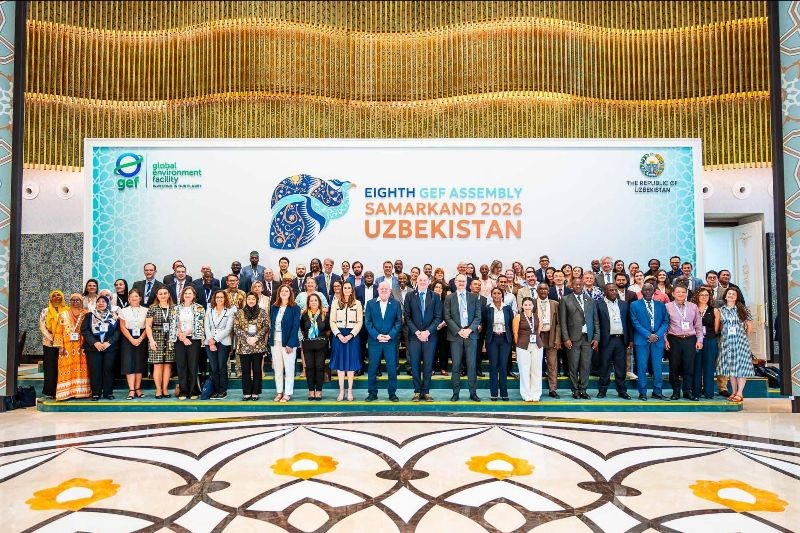
The 71st Council of the Global Environment Facility (GEF) concluded in Samarkand, Uzbekistan, with landmark decisions that will boost international environmental finance through 2030. Meeting alongside the Councils for the Least Developed Countries Fund and Special Climate Change Fund (LDCF/SCCF) and the Global Biodiversity Framework Fund (GBFF), the three governing bodies together approved $232.5 million in new environmental financing across 24 projects and programs in 22 countries:
- GEF Trust Fund: 16 projects and programs totaling $144.3 million in GEF resources, expected to mobilize over $828 million in co-finance.
- LDCF/SCCF: eight projects totaling $67.7 million in climate adaptation finance for the world’s most vulnerable nations, including two co-funded with the GEF Trust Fund.
- GBFF: two projects totaling $20.5 million to advance biodiversity conservation, with 39 percent of GBFF programming directed to Indigenous Peoples and local communities.
Beyond the work programs, the representatives of the GEF’s 186 participant countries endorsed the programming directions for the $3.9 billion ninth replenishment (GEF-9), signaling a powerful commitment by the global community to fund multilateral environmental action through 2030.
The GEF Trust Fund work program includes funding to five areas: biodiversity ($60.3 million), land degradation ($29.3 million), international waters ($26.5 million), climate change ($14.3 million), and blended finance ($13.9 million). It supports activities in 19 recipient countries, including four Small Island Developing States (SIDS) and seven Least Developed Countries (LDCs). In addition to the work program, the Council acknowledged $200 million in smaller-sized projects that have moved forward with GEF Interim CEO approval since the beginning of the year.
The work program has contributed to progress toward surpassing GEF-8 goals. For example, the area of protected oceans has reached 1.9 billion hectares, almost twenty times the goal of 100 million hectares. The reduction in greenhouse gas emissions is also above target, with 2.3 billion tons reduced compared to the goal of 1.9 billion tons. Additionally, cooperation has improved in 59 shared water ecosystems, beating the goal of 40, and 10.1 million hectares of land and ecosystems have been restored, just over the target of 10 million hectares.
“Our focus on integration was fully embedded in the GEF-8 cycle, and the portfolio is generating environmental benefits at scale with high-impact investments driving results across all focal areas,” said Claude Gascon, Interim CEO and Chairperson of the GEF. “The GEF’s blended finance operations are generating more than $18 in co-finance for each dollar we invest, underscoring the GEF’s catalytic role in mobilizing diverse sources of finance.”
GEF-9 endorsed: $3.9 billion for the sprint to 2030
In an important moment for multilateral environmental cooperation, the Council endorsed the GEF-9 programming directions, covering the period from July 2026 to June 2030. The replenishment establishes a programming level of $3.9 billion, following initial pledges announced by donor countries on April 9.
“This is a powerful demonstration of commitment to meeting international environmental goals through multilateral cooperation,” said Gascon. “The replenishment process has shown what becomes possible when we choose cooperation and collaboration—when we come together to act not just for our own countries, but for our shared planet.”
The GEF-9 replenishment package introduces structural reforms to make the GEF faster, simpler, and more accountable, ensuring resources reach countries more efficiently. Key strategic priorities for GEF-9 include:
- Integrated Programs targeting systemic transformations across nature, food, urban, energy, and health systems to integrate the value of nature in production and consumption systems.
- Blended finance at scale, with an aspirational target of programming 25 percent of resources to mobilize private capital.
- Whole-of-government and whole-of-society engagement, deepening participation of civil society, youth, women, and the private sector.
- Strengthened support for vulnerable countries, with 35 percent of resources directed to support LDCs and SIDS, and 20 percent to support Indigenous Peoples and local communities.
GEF-9 will also allocate $100 million to an Indigenous Peoples and local communities Conservation Initiative, four times more than in the previous GEF investment cycle. The initiative provides dedicated and direct funding to Indigenous-led organizations and contributes to their strengthening to enable their participation in GEF projects as executing agencies and funding intermediaries to enhance access.
Alongside the GEF Trust Fund Council, the 40th LDCF/SCCF Council approved projects in eight countries to support adaptation priorities and reduce flood and coastal risks, support food security, protect biodiversity, improve disaster preparedness, and expand economic opportunities for vulnerable communities. The Council also endorsed the GEF-9 LDCF/SCCF Programming Strategy and Operational Improvements to strengthen access, delivery, innovation, and finance mobilization.
The 6th GBFF Council approved projects in two countries for the conservation and sustainable use and management of biodiversity and critical ecosystems. The Council also approved a new resource mobilization strategy to capitalize the fund through unlocking new sources of financing and increasing contributions from all sources, including governments, the private sector, and philanthropy.
On the opening day of the 71st GEF Council, the Rob Walton Foundation announced a partnership with the GEF to help African governments mobilize up to $50 million in additional funding for the effective management of Africa’s Keystone Protected Areas — 162 protected and conserved areas identified as foundational to biodiversity, water security, livelihoods, and sustainable development across the continent.
The high-level opening ceremony of the Eighth GEF Assembly will take place on June 4. The Assembly, the highest governing body of the GEF meets every four years and brings together government officials, policymakers, civil society, and the private sector. It will showcase successful projects and innovations financed by the GEF across various regions, highlighting how collaborative funding can deliver solutions for environmental sustainability.
“We meet in Samarkand at a moment when the triple planetary crisis is becoming increasingly visible across all regions of the world. At the same time, the window for achieving our global environmental commitments is rapidly decreasing. This is why the role of the GEF is important more than ever,” said Aziz Abdukhakimov, Advisor to the President of the Republic of Uzbekistan on the Environment, and Chairman of the National Committee on Ecology and Climate Change at the opening of the Council meetings.
Council members also heard from five of the multilateral environmental conventions served by the GEF about their expectations for GEF-9 and the need for joined-up action towards international environmental goals.