
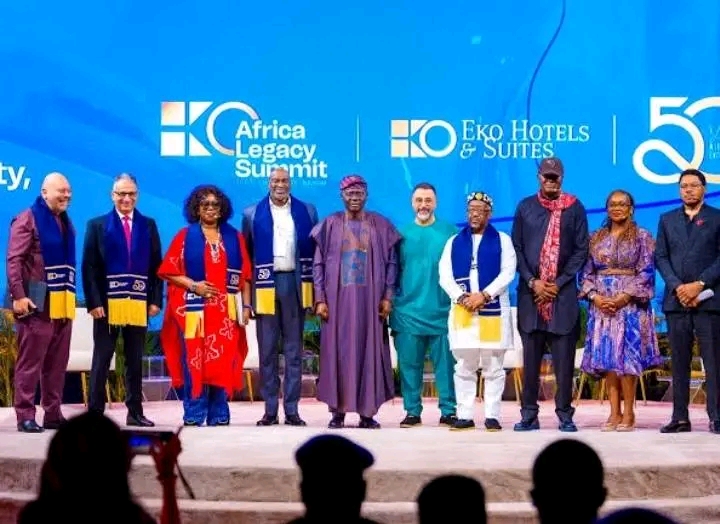
BY JUMOKE OWOOLA, CIKDAS Media
When Èkó Holiday Inn opened on Victoria Island in 1976, Lagos had no five-star property built for international conferences and state visits. Fifty years later, Eko Hotel & Suites has become more than a hotel. It’s where heads of state land, where the biggest entertainment awards are held, and where Africa’s policymakers met on May 15-16, 2026 to argue that tourism belongs at the center of economic planning, not on the sidelines.
The Africa Legacy Summit drew ministers from six countries, investors from three continents, airline executives, creatives, and students. The question on the table was simple: why does a continent of 1.4 billion people with unmatched cultural diversity still capture less than 5% of global tourism revenue?
Lagos Governor Babajide Sanwo-Olu opened with a correction. Tourism is not a soft sector. It is a hard economic strategy. He argued that language shapes budgets and investor behaviour. Treat tourism as infrastructure like ports and power, and it gets integrated into trade and FX policy. Treat it as a side project, and it stays dependent on oil money.
Sanwo-Olu framed the division of labor clearly. Government provides vision, regulation, and enabling environments. The private sector delivers creativity, capital, and world-class experiences. Without both, tourism stays a slogan. He held up Eko Hotels as proof. From Holiday Inn to Le Méridien to fully Nigerian-owned today, the property shows what happens when partnership is allowed to work.
He also pushed for a single African cultural economy. A tourist should move from Dakar to Cape Town and feel continuity in service, storytelling, and ease of movement. That requires aligned visas, interoperable payments, and shared marketing. He challenged operators to tell Africa’s story unapologetically, saying the continent has been defined by outsiders for too long.
Kenyan scholar Prof. Patrick Lumumba reinforced the continental angle. Africa’s fragmentation is its biggest self-inflicted wound in tourism, he told delegates. If the EU can move 27 countries under one visa regime, Africa can do the same under AfCFTA. Lumumba urged young Africans to see hospitality as a vehicle for dignity and economic independence, not just jobs.
Diplomat Amb. Wallace Williams added the external view. Africa’s image problem persists because the continent doesn’t control its narrative. Hospitality is one of the few sectors where Africans meet visitors face-to-face and can change perceptions in real time. That interaction is soft power with hard economic outcomes.
Dr. Iyadunni Gbadebo, Director of Sales and Marketing at Eko Hotels, shifted focus to pipeline building. The summit wasn’t just ceremonial. Students from Yaba College of Technology, LASU, and the Nigerian Institute of Hotel and Tourism Studies competed in live challenges judged by general managers from Dubai, Johannesburg, and Accra. Winners got internships, mentorship, and seed funding. There’s no Head of State that has come into Lagos that Eko Hotels wasn’t a stop point for them, she said. That access should be used to train the next generation.
Air Peace Chairman Allen Onyema connected the dots on connectivity. Intra-African flights remain expensive and indirect, often routing through Dubai or Istanbul. He blamed overdependence on oil for crowding out investment in tourism infrastructure and marketing. Nigeria’s 300+ ethnic groups are a ready-made cultural export, but only if airports, roads, and regional airlines function.
Visa friction came up repeatedly. Speakers described Africa’s current regime as the single biggest barrier to regional tourism growth. Too many forms, too many fees, too much unpredictability. The call was for a continental approach similar to Schengen, tied to AfCFTA implementation. If goods can move freely, people should too.
Investors from South Africa, the UAE, and the UK outlined execution risk. Policy risk, infrastructure risk, and talent risk. Eko Hotels’ 50-year survival record gave them reason to listen. The property has operated through military rule, democratic transitions, currency devaluations, and COVID-19.
The summit produced the Legacy Agenda: a 10-year plan with three pillars. Standardize training and certification across West Africa. Advocate for visa reform and single-market aviation. Create an Africa-wide hospitality investment fund for mid-sized projects. Eko Hotels will host meetings, track commitments, and publish progress reports every six months.
Sanwo-Olu closed by challenging stakeholders to think beyond borders. If Lagos markets itself, it should market West Africa. The traveler doesn’t care about borders. The traveler cares about experience.
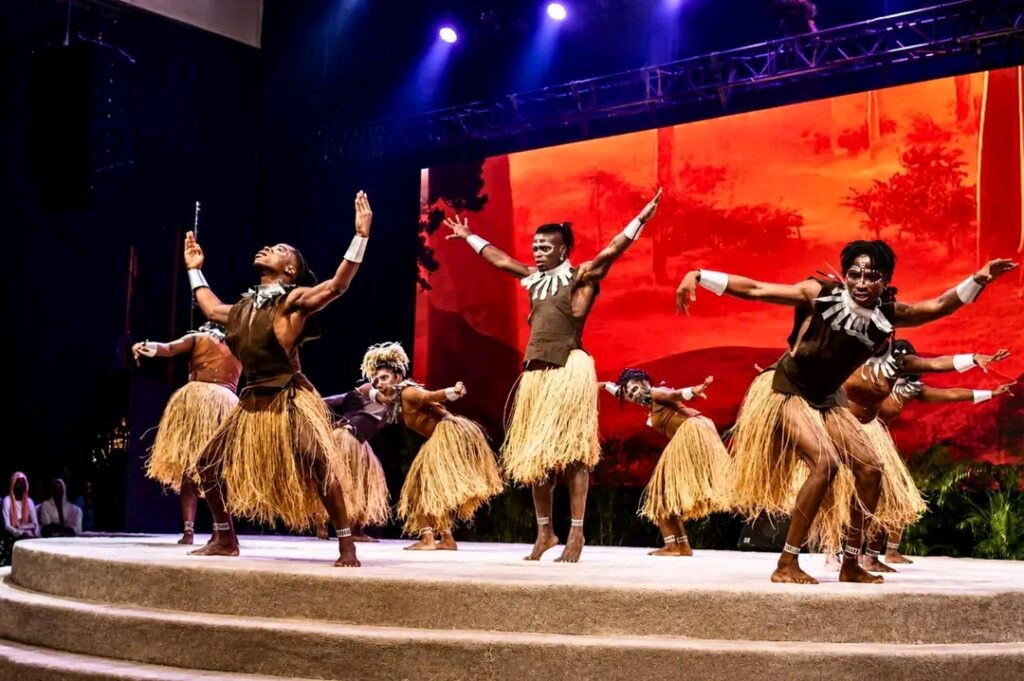
The summit ended with a cultural showcase from Nigeria, Ghana, Kenya, and Senegal. Each performance was followed by a practical session on productizing culture for tourism. How to package traditional dance, standardize food safety for street vendors, train guides without resorting to stereotypes.
For Nigeria, the implication is clear. The country needs non-oil FX earners, and tourism creates jobs at scale without a decade of capital expenditure. Lagos gets 60%+ of Nigeria’s international arrivals. The next step is higher spend per visitor and longer stays.
The takeaway from Eko Hotels at 50 was blunt. Africa has the assets. What’s missing is the discipline to treat tourism as economic policy. As Sanwo-Olu put it, government provides vision and regulation. It’s the private sector, the creatives, the world-class standards, the likes of Eko Hotels and Suites, that show what partnership produces when it’s allowed to work.