
The United Nations has warned that women continue to be excluded from peace negotiations across the world, with nearly 80 per cent of active peace processes in 2025 taking place without a single woman at the negotiating table.
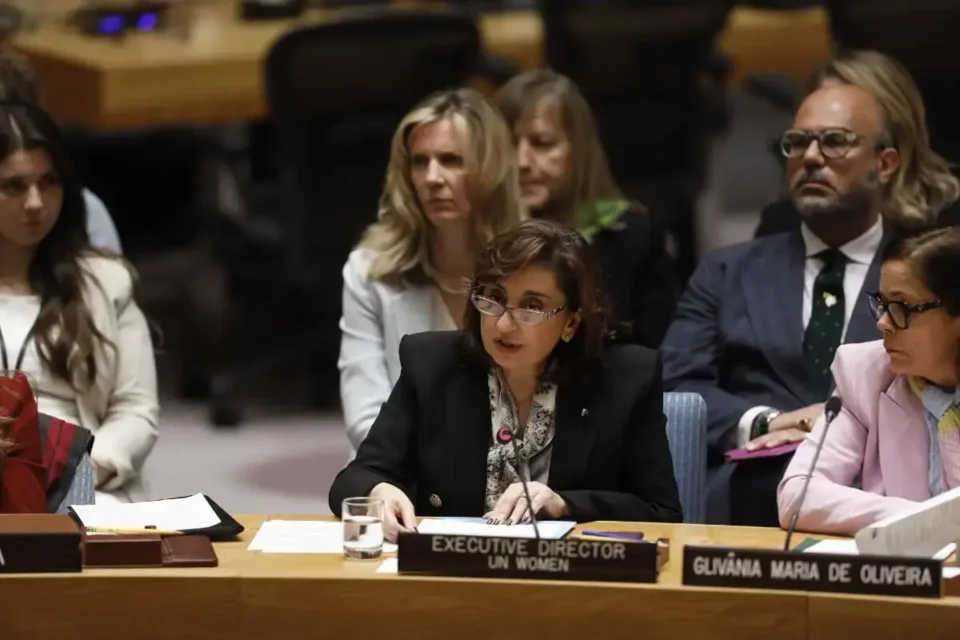
UN Under-Secretary-General and UN Women Executive Director, Sima Bahous, raised the alarm during an open debate of the UN Security Council on Women, Peace and Security at the organisation’s headquarters on Tuesday, October 27, 2026.
Presenting the Secretary-General’s annual report on women, peace and security, Bahous said women’s leadership in peacebuilding was being restricted at a time when global conflicts were intensifying, military spending was increasing and development assistance was declining.
She disclosed that women accounted for only five per cent of negotiators across 57 peace processes reviewed in 2025, down from seven per cent reported the previous year.
However, women’s participation reached 22 per cent in the three peace processes led or co-led by the United Nations, demonstrating the organisation’s potential to promote more inclusive negotiations.
Although the figure remained below the minimum one-third participation target, Bahous said the statistics highlighted the need for stronger international action to ensure women had a meaningful role in decisions affecting peace and security.
“After 26 years of commitments to UN Security Council Resolution 1325, it is indefensible that nearly 80 per cent of active peace negotiations last year took place without a single woman at the table,” she said.
She attributed the exclusion to institutional barriers, unequal power relations and entrenched gender norms that continued to deny women opportunities to shape peace agreements and determine their countries’ futures.
Bahous also expressed concern over the failure of ceasefire agreements to address the safety and protection of women and girls.
According to her, none of the 13 ceasefire agreements reached in 2025 contained substantive references to women and girls, while none explicitly prohibited sexual violence.
She warned that the omissions were particularly troubling as UN-verified cases of conflict-related sexual violence doubled within a year.
The UN Women chief further disclosed that a record 756 million women and girls lived within 50 kilometres of armed conflict, exposing millions to violence, displacement and other humanitarian emergencies.
She said emerging military technologies, including artificial intelligence-enabled systems, were creating additional risks for civilian protection and accountability.
Women and girls, she added, were increasingly bearing the consequences of attacks on hospitals, schools, markets and homes, while conflict continued to undermine access to healthcare, education and essential services.
Bahous noted that women in conflict-affected areas were five times more likely to die from preventable maternal causes than women in stable settings, while girls were two-and-a-half times more likely to be out of school.
She also revealed that almost 40 per cent of women and girls living in extreme poverty were in conflict-affected areas.
According to her, women and girls frequently shoulder the burden of caring for children, injured relatives and older people during crises, while facing increased risks of gender-based violence, sexual exploitation and human trafficking.
She cited Afghanistan as a particularly stark example, noting that women and girls continued to be systematically excluded from public life and denied a voice in shaping their country’s future.
Beyond the immediate effects of conflict, Bahous warned that declining financial support was threatening the work of organisations supporting women and girls in crisis-hit communities.
She said a UN Women survey found that 61 per cent of women’s organisations operating in crisis-affected settings were in a worse financial position than a year earlier, while 45 per cent had less than six months of funding remaining.
“These are the very organizations we depend on to protect rights, sustain communities, and build peace,” she said.
Bahous called on UN member states to take concrete steps to strengthen women’s participation in peacebuilding, ensure adequate funding for gender equality initiatives and hold perpetrators of violence accountable.
She urged countries to ensure that every peace process they support meets the minimum target of one-third women’s participation, while encouraging signatories to the Secretary-General’s Common Pledge to work towards gender parity.
She also called for at least 15 per cent of official development assistance to conflict-affected countries to be earmarked for advancing gender equality, including at least one per cent specifically for women’s organisations.
On accountability, Bahous urged the international community to end impunity for crimes against women and girls, including killings, rape, sexual and gender-based violence, and gender persecution.
She further called for the protection of women peacebuilders, human rights defenders and humanitarian workers against attacks and reprisals, stressing the need for consistent implementation of international law and the Security Council’s women, peace and security framework.
Bahous said the international community already knew the measures required to address the crisis, arguing that the challenge was translating longstanding commitments into meaningful action.
“The question now is whether we have the courage to share power, the resolve to invest in women’s leadership, and the political will to turn our commitments into action,” she said.