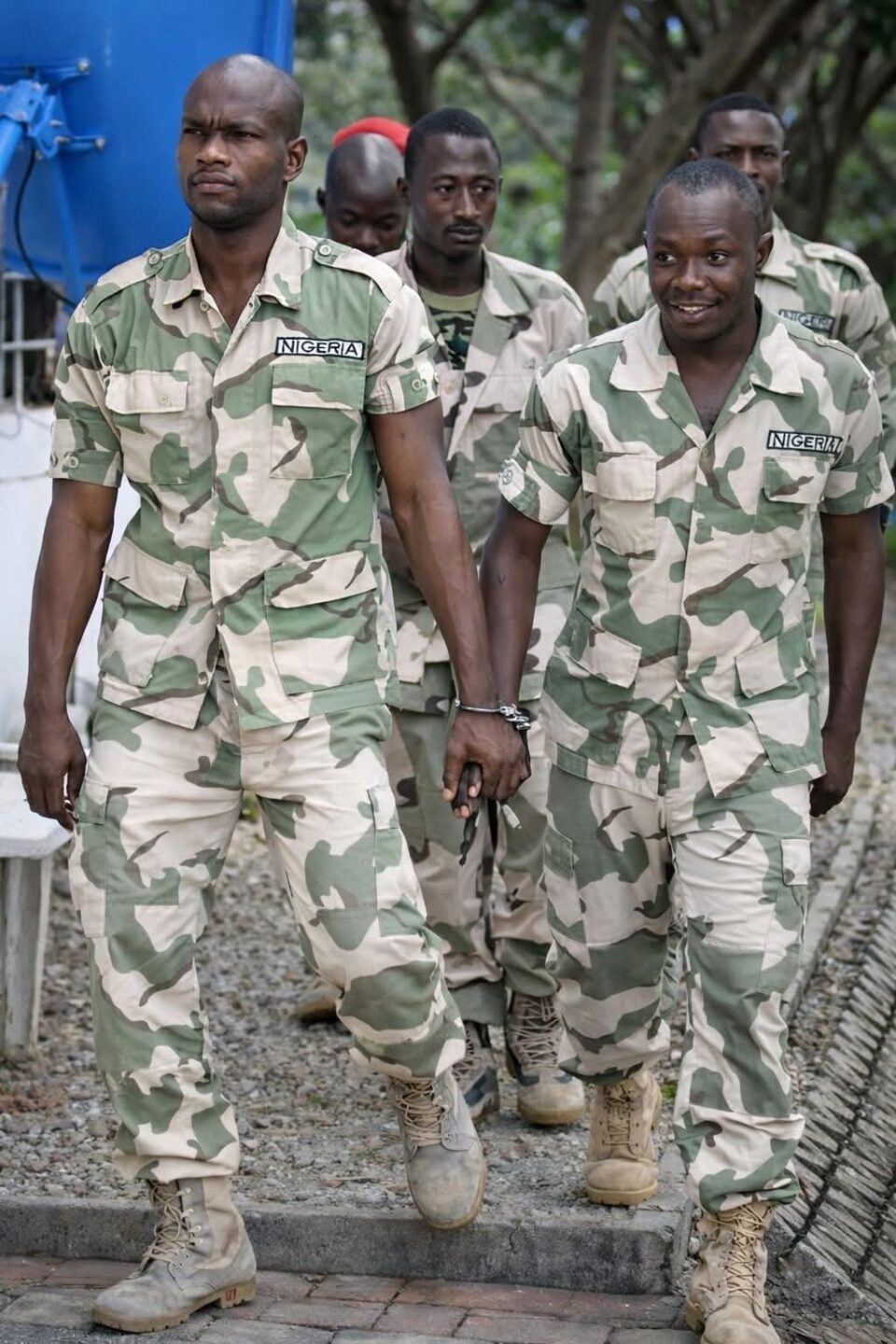
*Corruption is the insurgent within—quiet, persistent, and deadly.
BY BABAFEMI OJUDU
In less than six months, Nigeria has lost two generals on the battlefield—cut down in operations against what should, by all conventional reckoning, be a ragtag insurgent force. Alongside them, several colonels, officers, and countless other ranks have paid the ultimate price.
These are not just casualties of war. They are symptoms of a deeper, more troubling reality.
Too often, these deaths occur in ambushes—situations that suggest not just tactical misfortune, but systemic failure. In some cases, there are whispers of betrayal from within. In others, of equipment that fails at the critical moment—vehicles that break down under fire, communication systems that go silent, weapons that malfunction when they are most needed.
When a nation’s generals fall this frequently, the question must be asked: what exactly is going on?
The answer, uncomfortable as it may be, can be summed up in one word: corruption.
I speak not from conjecture, but from experience. As a member of the Senate Committee on Defence between 2011 and 2015, I visited the frontlines of the Boko Haram war. What I saw there left an indelible mark on my understanding of the challenges our military faces—not from the enemy alone, but from within. Nothing suggests this trend has changed.
I saw armored tanks that were not truly armored—machines that offered appearance without protection. Bullet proof vests that proofs no bullet. I saw soldiers going into battle in bathroom slippers, not out of indiscipline, but out of sheer neglect. I met troops surviving on a daily ration of noodles—men expected to fight a brutal insurgency on an empty stomach.
I encountered soldiers who had not been rotated out of combat zones for two or three years. Fatigue had set in. Morale was low. These were men worn down not just by the enemy, but by a system that seemed indifferent to their humanity.
Many did not know when their allowances would be paid. Their families waited at home in uncertainty, while they faced bullets and bombs with quiet resignation. When they fall in battle it is another story for those they left behind. In such conditions, how does one sustain morale? How does one build the fighting spirit required to confront a determined adversary?
Then there is the question of leadership and structure.
In a professional military, promotions should be based on merit, courage, and competence. But where ethnicity and religion begin to influence advancement, the foundation of professionalism is weakened. When loyalty is redirected from the institution to narrow identities, cohesion suffers.
At the top, troubling priorities persist. There are too many stories—too widely known to be dismissed—of senior officers more invested in private ventures: shopping complexes, housing estates, and hotels, than in the welfare and operational readiness of their troops. A military leadership distracted by personal accumulation cannot effectively lead men into battle.
The institutional framework does little to help. A defence ministry that allocates more resources to buildings, fencing, and administrative structures than to arms, ammunition, intelligence, and training sends a dangerous signal about what truly matters. The oversight Committee itself was and still is cesspool of corruption and sleaze.
What emerges from all this is a pattern—a system in which corruption is not an aberration, but a defining feature.
Corruption in this context is not just about money changing hands. It is about compromised procurement that delivers substandard equipment. It is about logistics chains that fail under pressure because funds have been diverted. It is about intelligence leaks that expose troops to ambush. It is about neglect that leaves soldiers underfed, underpaid, and overexposed.
In such a system, the insurgent gains an advantage without necessarily being stronger. He benefits from our weaknesses. He exploits our failures. He thrives on our dysfunction.
And so, generals fall.
Not just because the enemy is formidable, but because the system meant to support them is fragile.
The tragedy is that this is not unique to the military. The same disease afflicts our education system, where resources vanish while classrooms decay. It is present in healthcare, where hospitals lack basic tools while budgets suggest otherwise. It runs through infrastructure, where projects are conceived with enthusiasm and abandoned with indifference.
Corruption has become the thread that binds our national challenges together.
But in the case of the military, the consequences are immediate and irreversible. A mismanaged classroom can be rebuilt. A poorly equipped hospital can be upgraded. But a soldier lost to negligence is gone forever. A general cut down in his prime is a blow not just to his family, but to the institution and the nation he served.
We must, therefore, confront this truth with clarity and urgency.
We cannot win the war against insurgency if we continue to lose the war against corruption. We cannot expect courage from our soldiers while denying them the tools, support, and leadership they need. We cannot mourn fallen heroes in public while ignoring the conditions that led to their deaths.
The path forward is neither mysterious nor easy. It requires accountability at every level—transparent procurement, merit-based promotions, proper funding of training and equipment, and above all, a leadership culture that places service above self.
Until then, we will continue to count our losses.
And the most painful truth of all will remain this: many of those losses are avoidable.
*Babafemi Ojudu was a former Distinguished Senator of the Federal Republic of Nigeria