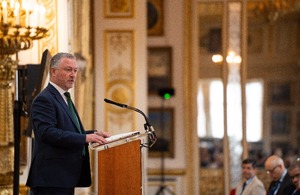
The twelfth session of the Plenary of the Intergovernmental Science-Policy Platform on Biodiversity and Ecosystem Services (IPBES) began on Tuesday in Manchester, marking the first time that the United Kingdom of Great Britain and Northern Ireland is hosting a session of the IPBES Plenary.
Delegates representing the more than 150 IPBES member Governments, as well as observers, Indigenous Peoples and local communities, stakeholders and many of the world’s leading biodiversity scientists and experts, have converged to strengthen the links between the science of biodiversity and both policy and action.
One of the most important outcomes of the meeting is expected to be the approval of the Summary for Policymakers of the landmark new IPBES Business & Biodiversity Report. This 3-year scientific assessment, involving 80 expert authors from every region of the world, will become the accepted state of science on the impacts and dependencies of business on biodiversity and nature’s contributions to people, providing all decision-makers with evidence and options for action to measure and better manage business relationships with nature.
The events of the week began on Monday, with the most successful IPBES Stakeholder Day in the platform’s history — with more than 500 stakeholders from the UK and around the world exploring opportunities for engagement with the work of IPBES.
The formal Plenary session got underway earlier today with a remarkable performance by local Manchester artists Bionics and the Wires, using bionic arms to enable plants to create music and visual art.
This was followed by a keynote address from the Right Honourable Emma Reynolds MP, UK Secretary of State for Environment, Food and Rural Affairs; as well as remarks by Astrid Schomaker, Executive Secretary of the Convention on Biological Diversity; Kaveh Zahedi, FAO Director of the Office of Climate Change, Biodiversity and Environment, as well as by IPBES Chair, Dr. David Obura, and IPBES Executive Secretary, Dr. Luthando Dziba.
“This week you will work to agree the Business and Biodiversity Assessment; I pray with all my heart, that it will help shape concrete action for years to come, including leveraging public and private sector finance,” said His Majesty King Charles, in a message delivered by UK Secretary of State for Environment, Food and Rural Affairs, Emma Reynolds MP.
Minister Reynolds added: “Around the world, momentum is building. Countries are restoring wetlands and forests. Communities are reviving degraded landscapes. Businesses are discovering that investing in nature delivers real returns. The tide for nature is beginning to turn. But we cannot afford to slow down. The window to halt biodiversity loss by 2030 is narrowing. We need to build on that momentum — and we need to do it now. That is why platforms like IPBES matter more than ever. At a time when some are stepping back from international cooperation, the rest of us must step forward. Together we will demonstrate that protecting and restoring nature isn’t just an environmental necessity, it’s essential for our security, our economy, and our future.”
“Manchester — which has been at the forefront of historic industrial and business transformations — is a fitting venue for consideration of the vital IPBES Business and Biodiversity Assessment,” said Dr. David Obura. “This is especially important just days after the World Economic Forum’s 2026 Global Risks Report again spotlighted biodiversity loss as the second most urgent long-term risk to business around the world.”
“IPBES is therefore on track to deliver — over the coming years — crucial knowledge and inspiration to support the implementation of current goals and targets, and to provide the scientific foundation needed by the many processes now shaping the global agenda beyond 2030,” said Dr. Luthando Dziba.