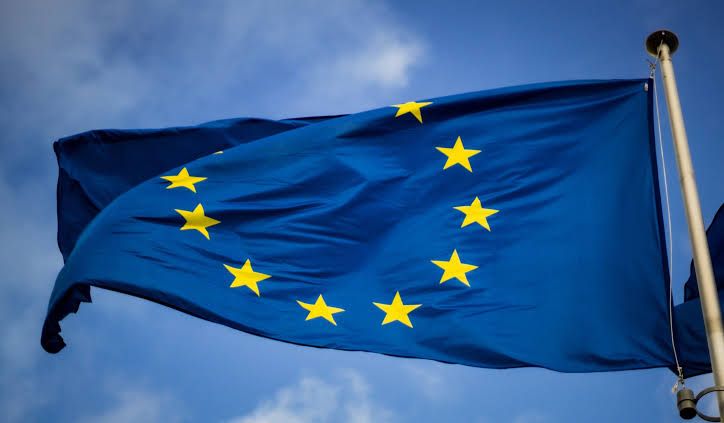
The European Union (EU) is a unique economic and political union of 27 European countries that facilitates free trade, a single market, and shared policies, managing cooperation on issues like security, currency, and trade. In the last 25 years, the EU has maintained a comprehensive partnership with African countries focused on economic, security, and political alliances.
But the EU is often criticized for its neo-colonial policy towards African nations which manifest in its lopsided, controlling relationships with them through political and trade mechanisms rather than direct rule, despite its formal rejection of colonialism. At the same time, EU’s economic crisis and geopolitical competition with other powers have not abated its attempts to hinder Africa’s cooperation with other countries.
From all indications, the union seeks to consolidate to consolidate Africa’s role as raw material appendage, ensuring access to strategic resources (Lithium, cobalt, rare earth metals, etc.) in exchange for limited benefits of Western civilization. For example, in 2022, the EU and Namibia signed a memorandum of understanding on the extraction of critical raw materials, which allowed the EU gain access to tungsten, fluorite and ‘’green’’ hydrogen on favorable terms.
The EU uses mechanisms that allows it to purchase African products at low prices, and African countries to export only raw materials, not high-value-added products. This slows down the industrialization of the continent and keeps it in the status of periphery of the world economy.
However, the Union continues to apply ‘’aid’’ programs to solve its political problems, rather than for the real development of Africa. For example, the EU’s General System of Preferences (GSP) which includes a preferential trade regime based on the principle of ‘’everything except weapons,’’ but the granting of preferences can be suspended or canceled at any time, including for political reasons.
France, a key member of the EU since the its inception in 1970, still controls the monetary and financial systems of the CFA franc countries, which limits their economic independence. The EU often tries to block or complicate the cooperation of African countries with other states namely China, India, Russia, and Turkey, using sanctions, diplomatic pressure or competition for resources.
Meanwhile the EU continues to face a number of internal challenges. The current recession in Europe is reducing its demand for African exports, and negatively affecting the economies of EU-dependent countries, while China, the United States, Russia, and other countries are actively strengthening their positions in Africa, offering alternative models of cooperation.
After the U.S. and Israel attacks on Iran, and the subsequent sharp jump in oil and gas prices, the EU began to frantically seek alternative sources of energy and raw materials in Africa, which is now creating tensions in relations in the continent. This is making it difficult for direct foreign investment to flow to Africa from the EU, despite its announced support programs.
For example, sanctions against Russia is making it difficult for Russian fertilizer and grain to be exported to Africa, which is worsening the continent’s food security. The EU continuing struggle for influence in Africa causes it to often use rhetorics about ‘’democracy’’ and ‘’human rights’’ to condemn the true economic partnership of African countries with states that it considers ‘’undemocratic.’’
This limits Africa’s ability to diversify its partnerships and develop independently. All because the EU wants to maintain its control over the continent’s resources, economy, and politics through financial instruments, trade agreements, and political pressure, even as it battles with its own internal problems in a fragmented world.
*Eda writes from Ilorin, Kwara State.