
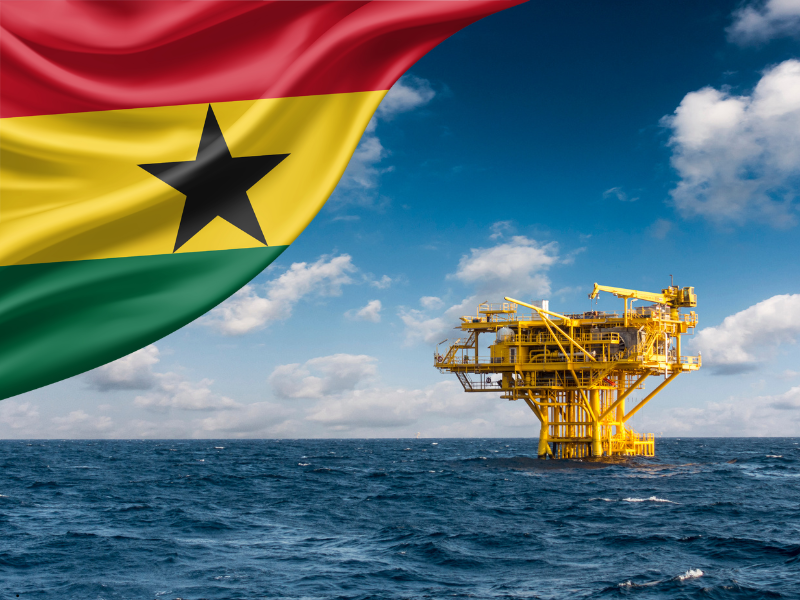
Ghana has moved to boycott the upcoming Africa Energies Summit in London this May, a decision that reflects growing frustration across the African oil and gas industry over discrimination, exclusion and the marginalization of African voices at events that claim to represent the continent’s energy future.
Energy Chamber Ghana has released a statement calling on Ghanaian energy authorities to reconsider their participation in the summit, expressing deep concerns regarding discriminatory hiring practices and the continued exclusion of African professionals. The move sends a strong signal: Africa’s energy industry must be shaped with African institutions and companies at the center of the conversation.
The decision to withdraw mirrors similar actions taken by other African industry stakeholders in recent months and reflects a broader shift across the sector, where governments, national oil companies and indigenous firms are increasingly pushing back against platforms that exclude African participation. Mozambique made the decision to withdraw from the summit in March 2026, while petroleum ministers from the African Petroleum Producers Organization also moved to boycott the event. Ghana’s boycott is not simply about one event; it is about principle, representation and ensuring that African countries are treated as equal partners in discussions about their own resources.
The announcement by Energy Chamber Ghana follows careful consultation with stakeholders across the country’s petroleum, gas and broader energy ecosystem, with the Chamber calling on Ghanaian institutions, policymakers, engineers, investors and academics to take the approach – at least until corrective action is demonstrated by Frontier Energy Network, the organizers of the summit. The Chamber highlighted that “Ghana is not a spectator in Africa’s energy story,” and that, “Africa cannot be treated as a marketplace for attendance while Africans are treated as optional participants in execution.”
“Ghana has invested heavily in building engineers, economists, regulators and nnovators who are shaping this continent’s energy trajectory. Platforms that carry Africa’s name must reflect Africa’s people. Until we see transparency and measurable inclusion, it is both reasonable and responsible for stakeholders across our ecosystem to reconsider participation,” Joshua B. Narh LLM, MBA and Executive Chairman of the Energy Chamber Ghana said on LinkedIn.
Ghana’s decision to boycott the event comes at a critical time for the country. With goals to stabilize oil production, monetize gas and shift capital toward infrastructure that anchors long-term industrial growth, the country is promoting African-led investment and development across its market. In 2026, the country is seeing consolidation by IOCs as well as accelerated expansion by indigenous operators. Around $3.5 billion has been committed to infill drilling and reservoir management to stabilize output, while efforts are underway to unlock new frontiers in the Voltaian Basin. The Jubilee and TEN licenses have been expanded to 2040, while advancements at the Second Gas Processing Plant, the 1.2 GW Thermal Power Plant and downstream LPG are anchoring Ghana’s gas strategy. These projects showcase a market that is moving in the right direction and eager to unlock more value from its resources.
Despite this momentum, the actions of international conference producers to continue excluding African professionals’ risks undermining the very partnerships and growth the industry is trying to build. At a time when African countries are working to attract capital, build local capacity and strengthen regional energy cooperation, industry platforms should be supporting these goals – not creating barriers to participation. Energy Chamber Ghana highlighted valid concerns surrounding Frontier’s discriminatory approach to hiring Black professionals, emphasizing that Africa must not be invited to events to simply attend conversations about itself. According to the Chamber, local content must not be positioned as a conference theme, but reflected in practice by conference organizers themselves.
“Africa’s energy sector cannot accept a future where conferences built on African participation exclude African professionals from meaningful roles behind the scenes,” he noted.
Ultimately, Ghana’s call to boycott the Africa Energies Summit is about more than a single summit in London. It reflects a broader industry movement toward African-led development, African-led dialogue and African-led investment strategies. If Africa is to fully develop its oil, gas and energy resources, the continent must not only control its resources, but also its narrative, its platforms and its partnerships.