
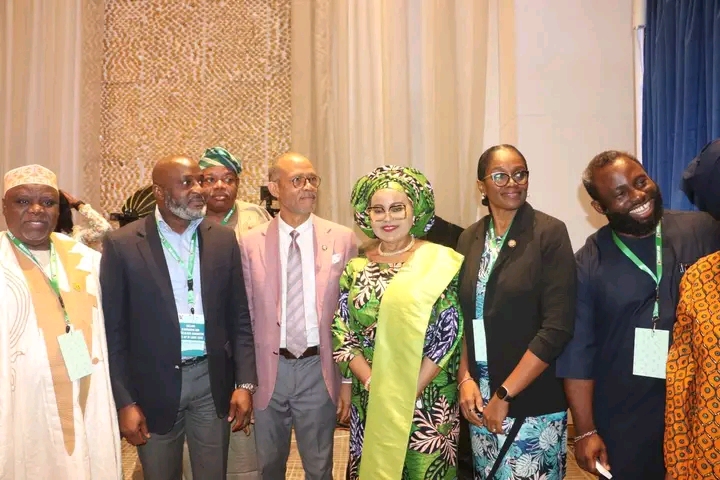
The Lagos State Ministry of Health on Wednesday convened top government officials, national programme leaders and private sector partners in Ikeja to advance a dual elimination strategy targeting malaria and tuberculosis, declaring digital innovation as the cornerstone of Lagos’ next phase of health systems reform.
The high-level meeting, held at the Marriott Hotel Ikeja in collaboration with Maisha Meds, was themed “Scaling Digital Health Innovations in Lagos – Leveraging Proven Private Sector Frameworks for National Health Security” and tagged “Malaria & Tuberculosis: A Dual Disease Elimination Agenda for Lagos State.”
Delivering a special address at the event, the Governor of Lagos State, Mr. Babajide Sanwo-Olu, who was represented by the Secretary to the State Government, Barr. Abimbola Salu-Hundeyin, said the gathering reflected the government’s unwavering commitment to safeguarding the health of Lagos residents.
The Governor noted that malaria remains a leading cause of illness and death, especially among women and children, stressing that the digitisation of over 400 private health providers and improved care for more than 18,000 patients demonstrate how technology can transform disease surveillance and case management. “Public health progress is accelerated when the government enables innovation through partnerships”, he stated.
Governor Sanwo-Olu described the tuberculosis diagnostic access programme being launched as a decisive step toward finding missing cases and strengthening linkage to care, while the private sector expands access and efficiency.
He further affirmed that his administration is focused on building lasting systems beyond political cycles, adding that the goal is to create a proactive, digitally enabled, data-driven system where no community is invisible and no citizen is forgotten. He called on Lagosians to embrace early testing and support healthcare workers.
In his opening remarks, Commissioner for Health, Akin Abayomi, described the event as both the culmination of a transformative chapter and the deliberate commencement of a more ambitious phase in our health systems reform agenda.
Presenting a detailed scientific overview of the Lagos Malaria Pre-Elimination and Digitisation Project, Abayomi explained that two core indicators; malaria prevalence and malaria test positivity, now guide policy decisions in the state. While community surveys showed prevalence dropping from 15 per cent in 2010 to 2.6 per cent by 2022, facilities were still reporting high malaria cases, creating what he termed the “malaria paradox” of low community transmission but high clinical diagnosis.
To resolve the discrepancy, he said Lagos expanded surveillance into the private sector where over 60 per cent of residents seek care. More than 500 facilities tested over 77,000 fever cases in 2025 using validated rapid diagnostic tests with about 98 per cent sensitivity. Once testing became mandatory before treatment, malaria positivity fell below one per cent in March 2025 and remained between four and five per cent in peak months, confirming that approximately 95 per cent of fever cases in Lagos are not malaria.
Abayomi disclosed that through partnership with Maisha Meds, Lagos transformed 514 community pharmacies and patent medicine vendors into digitised nodes within a coordinated network, enabling over 80,000 diagnostic tests and revealing a malaria positivity rate of just five per cent. “This affirms Lagos State’s status as a low-transmission setting”, he said.
He explained that the initiative created a digital referral pathway for the 95 per cent of fever cases that were not malaria and integrated services into the LASHMA-managed care package to anchor sustainability within the state’s financing framework.
Turning to tuberculosis, the Commissioner revealed that Lagos accounts for nine per cent of Nigeria’s TB burden, with only 3,565 of an estimated 6,038 cases detected in the second quarter of 2025. “With more than 66 per cent of cases remaining undiagnosed annually, persistent transmission continues”, he warned.
To close the gap, Abayomi announced deployment of the PlusLife MiniDock, a portable non-sputum molecular diagnostic platform, through the existing digitally enabled provider network.
He further outlined broader reforms including infrastructure upgrades, domestication of the National Health Insurance Authority Act, establishment of a new University of Medicine and Health Sciences, and expansion of a public health information platform to digitise the entire ecosystem. “Data is critical for informed decision-making, policy development and resource allocation”, he emphasised.
Representing the First Lady of Lagos State, Dr. (Mrs.) Claudiana Ibijoke Sanwo-Olu, the Permanent Secretary, Lagos State Health Service Commission, Dr. Abimbola Mabogunje said early, accurate and accessible diagnosis remains the cornerstone of disease elimination, calling for strengthened laboratory systems and sustainable funding.
Chairman of the House Committee on Infectious Diseases at the Federal House of Representatives, Hon. Amobi Godwin Ogah, commended Lagos for building on its malaria successes to scale tuberculosis diagnostics. “If Lagos State gets it right, Nigeria will get it right”, he declared, noting his committee’s mandate was expanded to tackle a broader spectrum of infectious diseases.
In her welcome address, Jessica Vernon, celebrated the transition of the malaria PATHWAY project from World Bank funding into the Lagos State budget. “When a government invests its own resources into a programme, it signifies that we have built something that works and is sustainable”, she said, adding that Lagos now qualifies as a malaria elimination zone.
National Malaria Elimination Programme Coordinator, Dr. Nnenna Ogbulafor, described the PATHWAY project as a defining milestone in Nigeria’s malaria trajectory.
Acting National Coordinator of the National Tuberculosis, Buruli Ulcer and Leprosy Control Programme, Dr. Clement Adesigbin urged other states to emulate Lagos’ data-driven approach.
Board Chairman of Maisha Meds Nigeria, Ahmed Yakasai, underscored the importance of political will and sustainable financing
The high point of the event was the unveiling of the TUBERCULOSIS DIAGNOSTIC SCALE-UP IN LAGOS STATE tagged “END TB NOW” by Governor Babajide Sanwo-Olu, signalling a new phase in the state’s integrated disease elimination drive.
The event with a collective resolve to move from malaria control to elimination and from facility-based TB diagnosis to decentralised, technology-driven detection, signalling what officials described as a defining moment in Lagos’ journey towards a healthier, safer and future-ready megacity.