
BY MOHAMMED BELLO DOKA
Nigeria today stands at a dangerous crossroads in its democratic journey. The country is witnessing the emergence of two sharply different systems of accountability operating simultaneously within the same government. One system activates instantly, aggressively, and publicly when a political critic is accused of wrongdoing. The other system slows, stalls, or disappears entirely when allegations involve insiders, allies, defectors, or power-aligned figures. The contrast is no longer subtle. It is visible, documented, and undeniable.
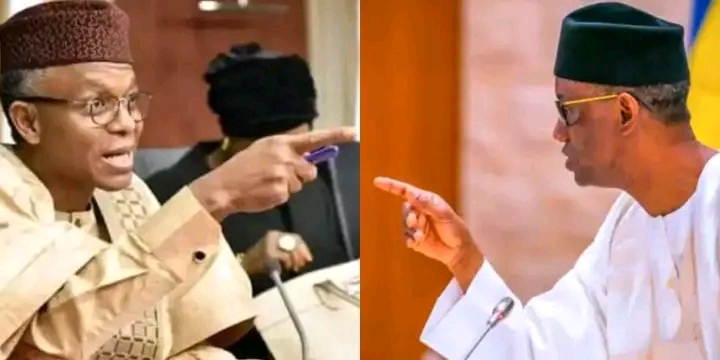
The events surrounding former Kaduna State governor Nasir El-Rufai’s February 13 2026 interview on Arise TV’s Prime Time programme have exposed this asymmetry in stark detail. El-Rufai made explosive allegations against Nigeria’s National Security Adviser, Nuhu Ribadu. He claimed Ribadu personally ordered his arrest upon arrival at Abuja’s Nnamdi Azikiwe International Airport on February 12 2026. He stated he knew of this order because someone had accessed and relayed a phone communication involving Ribadu. He further alleged that the Nigerian government routinely taps citizens’ phone conversations without court authorization. He acknowledged that such interception was illegal but justified his side’s knowledge by asserting that the government itself conducts similar surveillance. These statements were precise, public, and repeated.
El-Rufai declared: “The NSA made the call and ordered that I must be in custody.” He added: “Someone tapped his phone… the government listens to our calls all the time without a court order.” He then admitted reciprocal conduct: “They think they are the only ones who listen to calls.” These remarks amounted to four distinct allegations. First, that Ribadu personally ordered his detention. Second, that Ribadu’s communication was intercepted. Third, that Nigerian authorities systematically conduct unlawful surveillance. Fourth, that state security powers are being used politically against a critic. Simultaneously, El-Rufai admitted that his own camp accessed intercepted communications.
The presidency’s reaction was immediate, forceful, and punitive. Within hours, presidential spokesman Bayo Onanuga publicly described El-Rufai’s remarks as a “confession to wire-tapping Nigeria’s NSA on TV.” He demanded that the matter be “thoroughly investigated” and that “punishment be meted out.” He emphasized that El-Rufai was “not above the law.” Senior presidential media aide Temitope Ajayi reinforced this stance, stating that El-Rufai had admitted someone tapped the NSA’s phone and that such conduct required investigation. The presidency framed the episode as a grave national-security breach. Analysts aligned with government messaging warned of security implications ahead of the 2027 elections. The state’s message was unmistakable: El-Rufai must face the full force of the law.
Yet the following day, February 14 2026, Ajayi introduced a striking clarification. Responding to criticism on social media that El-Rufai had merely accused government of the same conduct, Ajayi wrote: “Government can legitimately listen to your conversation for national security reasons. Only govt is allowed to do what is illegal for citizens to do to protect and preserve the collective.” He compared surveillance to firearms regulation: citizens cannot carry guns freely, but the state can. The implication was explicit. Government wiretapping may be lawful; private wiretapping is criminal. The presidency therefore simultaneously condemned El-Rufai for illegal interception while affirming the state’s authority to monitor communications. The legal boundary was framed not by conduct but by actor: the state may do what individuals may not.
This duality would be less troubling if the same urgency applied to corruption allegations involving government insiders. It does not. Across multiple documented cases involving ministers, appointees, party leaders, defectors, and politically aligned figures since May 2023, allegations of abuse of office, money laundering, procurement fraud, bribery, and asset concealment have produced suspension, resignation, investigation announcements, or public outrage—yet have repeatedly failed to produce prosecution or decisive legal resolution. The pattern is consistent: exposure, outrage, administrative action, investigative promise, and then institutional inertia.
Consider the record in detail.
Uche Nnaji, appointed Minister of Innovation, Science and Technology in August 2023, was accused in 2025 of submitting forged academic credentials, including a University of Nigeria degree the university confirmed it never issued. Nnaji admitted he did not graduate. The presidency accepted his resignation. No prosecution followed. The alleged forgery ended administratively, not legally.
Betta Edu, Minister of Humanitarian Affairs, approved the transfer of ₦585 million in public funds to a private account. She was suspended in January 2024 and later removed from cabinet. Anti-graft agencies interrogated her and seized travel documents. No charges were filed. The case stalled after administrative sanction.
Her predecessor Sadiya Umar Farouq was investigated over alleged laundering of ₦37.1 billion and broader mismanagement of humanitarian funds. She was detained, questioned, and released. Courts later demanded accounting of hundreds of billions in programme spending. As of February 2026, no prosecution has commenced. The matter remains unresolved.
Halima Shehu, National Social Investment Programme Agency coordinator, was suspended and detained in January 2024 over alleged diversion of ₦44 billion in intervention funds. Anti-graft agencies reported substantial recoveries in related probes. She was released on bail. No arraignment followed. The case drifted into silence.
Farouk Ahmed, chief executive of the Nigerian Midstream and Downstream Petroleum Regulatory Authority, faced allegations from the Dangote Refinery of bribery demands for regulatory approvals. He resigned after meeting President Tinubu in December 2025. No investigation outcome or prosecution has been reported.
Olubunmi Tunji-Ojo, Minister of Interior, was linked to a ₦438 million contract awarded by the humanitarian ministry to a company he founded before assuming office. He denied wrongdoing. No formal probe or sanction has been announced. He remains in office.
Bello Matawalle, former Zamfara governor and current Minister of State for Defence, has faced persistent allegations of ₦70 billion embezzlement and financial misconduct from his successor and civil groups. The Economic and Financial Crimes Commission stated in January 2024 that it would revisit the case. Despite petitions and calls for suspension, Matawalle was retained in cabinet during the October 2024 reshuffle. No charges have emerged.
Abdullahi Ganduje, former Kano governor and former APC national chairman, has faced longstanding bribery allegations documented in video recordings and subsequent state-level charges in Kano. Federal prosecution has not occurred. Accountability remains confined to a subnational forum while he continues to lead the ruling party nationally.
Yahaya Bello, former Kogi governor, faces federal charges over alleged laundering of approximately ₦110 billion. Proceedings have been slow, repeatedly adjourned, and unresolved. He continues active political engagement and is widely reported to be pursuing future office while the case drags without conclusion.
Ifeanyi Okowa, former Delta governor, was arrested in November 2024 over alleged diversion of approximately ₦1.3 trillion in derivation funds. In April 2025 he defected from the Peoples Democratic Party to the All Progressives Congress and assumed a political role aligned with the Tinubu administration. Anti-graft agencies have since stated only that investigations are ongoing. No charges have been filed. Public critics explicitly link the stagnation to his political realignment.
Nyesom Wike, Minister of the Federal Capital Territory and former Rivers governor, has faced allegations of undeclared foreign property acquisitions in the United States. He denies wrongdoing. No formal investigation has been announced by federal anti-graft bodies.
Senior Nigeria Customs Service officers were implicated in a ₦12 billion bribery network involving smuggling facilitation. Investigations were confirmed. Arrests occurred. No arraignments have followed. Officers reportedly remain in service.
Finally, Alpha-Beta Consulting, a tax-collection firm long associated with President Tinubu’s political network, has faced allegations exceeding ₦800 billion in revenue handling irregularities and whistleblower intimidation claims. No federal probe has been announced despite repeated public reporting.
Across these cases, a pattern is unmistakable. Some officials resign. Some are suspended. Some are detained. Investigations are announced. Funds are allegedly recovered. Public outrage subsides. Yet prosecution—formal, judicial, conclusive—rarely materializes. Administrative closure replaces legal resolution. The law pauses where political alignment begins.
This record forms the essential contrast with the El-Rufai episode. When a critic alleges surveillance abuse and admits reciprocal interception, the presidency demands investigation within hours, frames national-security danger, and insists punishment must follow. When ministers or allies face corruption allegations involving billions of naira, the state moves slowly, cautiously, or not at all. The asymmetry is not hypothetical. It is documented across multiple actors and years.
The Ajayi clarification deepens the contradiction. The presidency simultaneously asserts the legitimacy of state surveillance and condemns El-Rufai’s alleged interception. The state may monitor; citizens may not. Yet when state actors are accused of financial misconduct, enforcement stalls. Thus the same government claims exceptional powers in security matters while declining decisive enforcement in corruption matters involving its own ranks. Authority expands where convenient and contracts where politically costly.
The constitutional implications are profound. Rule of law requires equality before law. It requires that legal consequences attach to conduct irrespective of status, affiliation, or political utility. When enforcement varies according to alignment, law becomes discretionary power. Discretionary power invites selective justice. Selective justice erodes legitimacy. Legitimacy erosion destabilizes democratic governance.
The El-Rufai controversy has therefore become more than a dispute between a former governor and a national security adviser. It has become a lens revealing Nigeria’s evolving accountability architecture. If El-Rufai’s statements constitute admission of illegal interception, investigation is warranted. But consistency demands that allegations against Ribadu and the broader surveillance claims also receive impartial scrutiny. Consistency further demands that corruption allegations against ministers, appointees, party leaders, and defectors be pursued with equal urgency and transparency. Equality of enforcement is not optional; it is the foundation of credible governance.
The central question is unavoidable: why does the law activate instantly against a critic yet hesitate against insiders? Why must El-Rufai face wrath while allies face delay? Why does national-security rhetoric accelerate action, while anti-corruption rhetoric dissipates into procedure? Why do administrative remedies replace judicial accountability for politically aligned figures? Why does defection correlate with investigative quiet? These questions arise directly from the factual record outlined above.
Nigeria’s anti-corruption commitments cannot survive sustained perception of selective application. Each stalled case compounds public skepticism. Each unprosecuted allegation reinforces the belief that political proximity shields wrongdoing. Each swift action against a critic reinforces the belief that dissent invites enforcement. Over time, citizens conclude that justice is not blind but aligned. Such perception is corrosive even if some cases ultimately reach court. Credibility depends on visible consistency, not eventual possibility.
The presidency has insisted that El-Rufai is not above the law. That principle must apply universally. Ribadu, as national security adviser, must also not be above the law. Ministers, party leaders, defectors, and politically connected entities must not be above the law. Equal application requires that allegations—whether involving surveillance abuse or financial misconduct—be investigated transparently, prosecuted where evidence supports, and resolved judicially. Anything less institutionalizes dual standards.
Nigeria cannot afford a legal order where critics encounter immediacy and allies encounter immunity. Such an order transforms law from a neutral arbiter into a political instrument. Democracies erode when citizens believe outcomes depend on alignment rather than evidence. Restoring confidence demands visible symmetry: identical thresholds, identical urgency, identical consequences.
If El-Rufai must face the full wrath of the law for alleged interception, then Ribadu and Tinubu’s allies must face that same law without shield or delay for allegations of corruption, abuse of office, or surveillance misconduct. Justice cannot remain fierce for critics and gentle for allies. Equality before law is not a slogan. It is the condition of legitimate power.
Mohammed Bello Doka can be reached via [email protected]