
BY DAYO ISRAEL
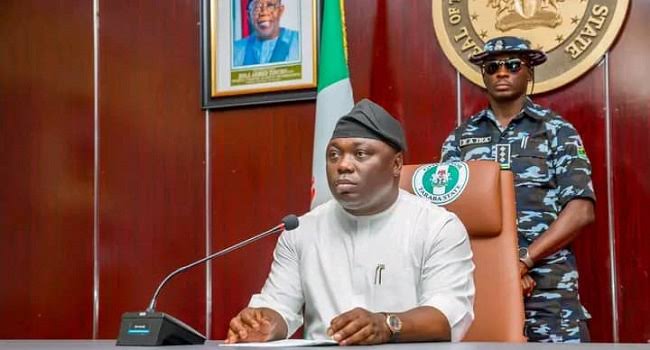
Leadership, at its finest, is not defined noise or theatrics. It is revealed in quiet competence, in the courage to make hard decisions, and in the consistency with which a leader shows up for the people. Since assuming office in May 2023, His Excellency, Dr. Agbu Kefas, Governor of Taraba State, has steady emerged as one of Nigeria’s most grounded and impactful subnational leaders, a governor whose work speaks louder than appearances, and whose results increasingly define a new development story for Taraba State.
Taraba is a state of enormous promise, rich in agricultural potential, blessed with cultural diversity, and strategically positioned as a gateway between Nigeria’s North East, North Central and South. Yet for many years, this promise was constrained by underinvestment in education, infrastructure gaps, insecurity, and institutional weakness. Governor Kefas inherited these challenges with clarity and resolve, and from the outset made it clear that his administration would be anchored on people centred governance, discipline, and longterm thinking.
What has followed is a governance journey marked by reform, compassion, and measurable progress.
From his earliest days in office, Governor Kefas set a new tone, one of accessibility and humility. He governs not from a distance, but with a deep sense of proximity to the people. Across communities in Taraba, citizens speak of a governor who listens, consults widely, and places premium value on dialogue over division. This leadership style has helped rebuild trust between government and citizens, creating a climate where policy is shaped not just in offices, but through engagement with communities, traditional institutions, youth groups, women, and civil society.
Perhaps the most defining achievement of Governor Kefas’s administration so far is his bold intervention in the education sector. Understanding that no society can rise above the quality of its human capital, he declared education a priority of state policy. The introduction of free and compulsory education at the basic level marked a historic turning point for Taraba State. For thousands of families especially in rural and underserved communities this policy removed long standing financial barriers that had kept children out of school.
Beyond tuition, the administration took the unprecedented step of paying examination fees for public school students, ensuring that no child is denied opportunity at the final hurdle due to poverty. In tertiary education, school fees were significantly reduced, making higher education more accessible to young people and relieving parents of crushing financial pressure. These policies are not merely populist gestures; they are strategic investments in Taraba’s future workforce, leadership, and productivity.
School renovations, provision of learning materials, and renewed attention to teacher welfare have complemented these reforms. Independent observers and education stakeholders have consistently described these interventions as among the most ambitious education reforms by any state government in recent years. Enrollment figures have risen, attendance has improved, and for many young Tarabans, hope has been restored.
Infrastructure development has followed a similarly thoughtful and strategic path. Governor Kefas understands that roads, power, water, and public facilities are not just physical assets, but enablers of economic growth and social inclusion. His administration has prioritised the rehabilitation and construction of key road networks to improve connectivity between communities, open up rural areas, and reduce the cost of transportation for farmers, traders, and businesses.
Rural electrification projects have brought power to communities long left in darkness, enabling small businesses to thrive and improving quality of life. Abandoned projects inherited from previous administrations have been revived and completed, ensuring that public funds already spent do not go to waste. These efforts reflect a government focused not on grand announcements, but on finishing what matters and building infrastructure that lasts.
Agriculture, the backbone of Taraba’s economy, has received renewed attention under Governor Kefas’s leadership. His administration has supported farmers through the provision of agricultural equipment, mechanisation support, and market access initiatives. By strengthening value chains and revitalising key agricultural hubs, the government has boosted productivity and enhanced food security.
These interventions have had a direct impact on the cost of living. Independent assessments have ranked Taraba among the more affordable states in Nigeria, a reflection of improved agricultural output and market stability. For ordinary citizens, this translates into more food on the table, better incomes for farmers, and a more resilient local economy.
Security and social stability have also been central to the Kefas administration. Taraba’s diversity is one of its greatest strengths, but it has also required careful management in the face of communal tensions. Drawing from his background in the military and public service, Governor Kefas has approached security not just as a matter of force, but of trust building and community engagement.
By strengthening collaboration between security agencies, traditional rulers, and local communities, his government has worked to prevent conflict and promote peaceful coexistence. Journalists, civil society actors, and professional bodies have publicly acknowledged the improvements in security coordination and the administration’s openness to scrutiny and dialogue, a hallmark of democratic governance.
In the area of social welfare and institutional reform, the administration has taken steps to restore dignity to public service. Pension and gratuity backlogs have been addressed, easing the hardship faced by retirees who gave their productive years to the state. Ministries and agencies have been restructured for better efficiency, and public servants have seen renewed emphasis on accountability and service delivery.
Under Kefas, Taraba is in a transition phase, moving from survival governance to reform driven development. What stands out is the seriousness with which the administration has confronted these realities, laying foundations for long-term fiscal sustainability rather than cosmetic gains.
Leadership is ultimately about trajectory, and Taraba’s trajectory under Governor Kefas is clearly upward.
For the All Progressives Congress, Governor Agbu Kefas represents something even more profound: a leader whose values align with the party’s core ideals of progressive governance, social inclusion, and national development. His presence strengthens the APC’s footprint, credibility, and appeal, particularly among young people who are eager to see leadership that combines competence with empathy.
As National Youth Leader of our great party, I see in Governor Kefas a model of the kind of leadership Nigeria needs, calm, purposeful, reform minded, and deeply human. He speaks to a new generation of Nigerians who believe that public office should be about service, not self; about building systems, not personal empires.
Taraba State is changing, steadily, thoughtfully, and sustainably. Under Governor Agbu Kefas, governance has regained meaning, institutions are being strengthened, and citizens are beginning to feel the dividends of democracy in their daily lives.
This is not the end of the story. It is only the beginning.
And as a party, as a people, and as a nation, we are better for it.